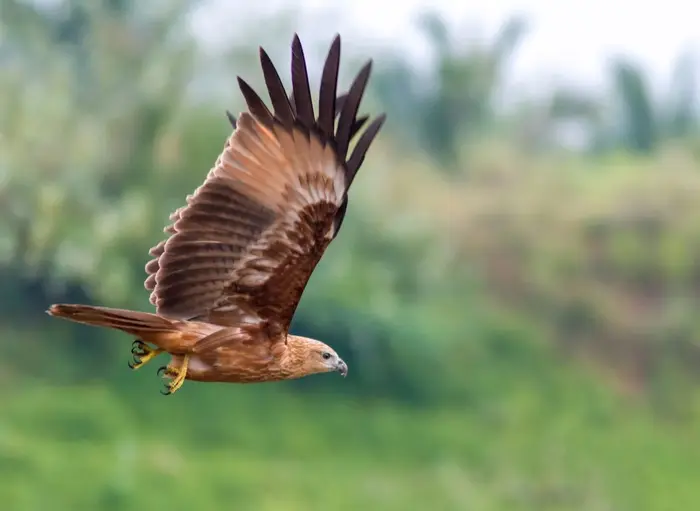
Hawks and owls are one of the most common — and most devastating — threats to a backyard flock. A single red-tailed hawk can kill several hens in one visit, and because raptors are creatures of habit, once they discover your flock, they will return daily until there is nothing left.
I lost two Rhode Island Reds to a Cooper’s hawk in a single afternoon the summer I started free-ranging my first flock. I was twenty metres away but did not hear a thing. That experience forced me to think seriously about aerial predator protection. After more than a decade of testing different approaches, these are the seven methods that genuinely work. However, I can tell you that no single method is foolproof on its own. Layering more of the approaches below gives your flock the best chance.
The 7 methods how to protect chickens from hawks and owls at a glance:
1. Cover the run completely with overhead netting or hardware cloth.
2. Provide dense hiding cover inside the run and free-range area.
3. Use a livestock guardian animal — dog, rooster, or guinea fowl.
4. Lock hens in before dusk to protect against owls.
5. Limit free-range to lower-risk times and supervise closely.
6. Deploy visual deterrents: owl decoys, reflective tape, predator-eye devices.
7. Remove raptor attractants — manage feed and rodents.
First: know how hawks and owls hunt differently
Hawks and owls use completely different tactics, and understanding this shapes which defences matter most. The good news: most of the seven methods below work against both. The key differences are timing (lock up at dusk for owl protection) and gap-proofing your overnight enclosure.
Hawks
Hawks (red-tailed, Cooper’s, sharp-shinned, and red-shouldered are the most common) hunt by day, most actively around midday and early afternoon. They attack in two ways: a high-speed dive from a perch or the sky, or a ground-level surprise approach through cover. They target birds that are isolated, stationary, or slow. A hen sitting in the open is an easy mark. See the Cornell Lab of Ornithology hawk species comparison to check different hawk breeds, like the red-tailed, Cooper’s, sharp-shinned, and red-shouldered hawk. They also offer a sample lesson on hawk and raptor identification.

Owls
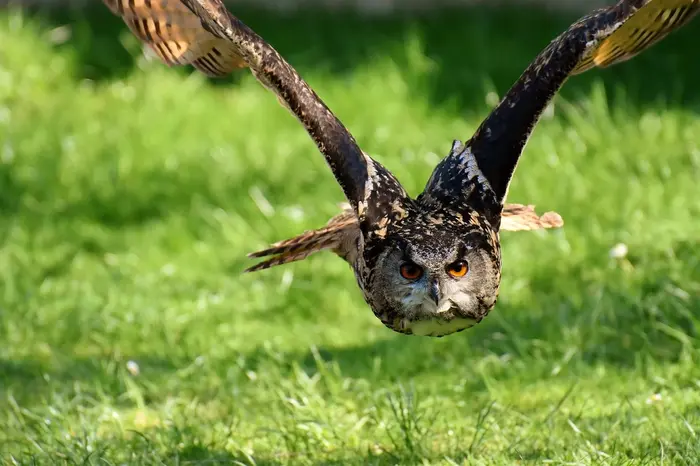
Owls (great horned, barred, and barn owls are the main culprits) are dusk-to-dawn hunters. They are almost completely silent in flight. They can carry birds significantly heavier than themselves. Because they strike at night, the first sign of an owl attack is often a dead or missing hen in the morning with no obvious point of entry — owls can reach through gaps in poorly secured runs. As Cornell Lab of Ornithology notes, great horned owls are among the most powerful aerial predators relative to body size in North America.
Method 1 — Cover the run completely overhead
A fully covered run is the single most effective aerial predator defence available. If a hawk or owl cannot reach your birds physically, they cannot kill them. This is the method I recommend first to every keeper who has lost birds to raptors.
Best materials for overhead covering:
- Hardware cloth (welded wire, 1/2-inch mesh): the gold standard. It resists owls reaching through, stops hawks completely, and lasts for years. More expensive upfront but far more durable than netting.
- Polypropylene bird netting (50mm or smaller mesh): cheaper and lighter — good for large free-range areas where hardware cloth is not practical. Replace every 2-3 years as UV breaks it down. Snow loading can collapse poorly supported sections.
- Overhead wire grid (spaced cable lines every 60cm): does not stop small hawks completely but breaks up the attack angle and deters most raptors. Useful for very large runs where full coverage is not feasible.
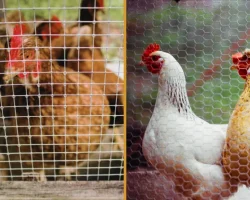
Warning: chicken wire and woven netting are okay overhead coverage, but are not the best option available. Chicken wire is strong, but its hexagonal weave has gaps large enough for small raptors to reach through and kill or injure birds close to it. Woven netting is a bit less strong. The best option is hardware cloth.
For full predator-proof coop and run design guidance, see our guide on how to build a predator-proof chicken coop. Getting the space right makes covering practical and affordable, so also see how to choose the right chicken coop size.
Method 2 — Provide dense hiding cover inside the run
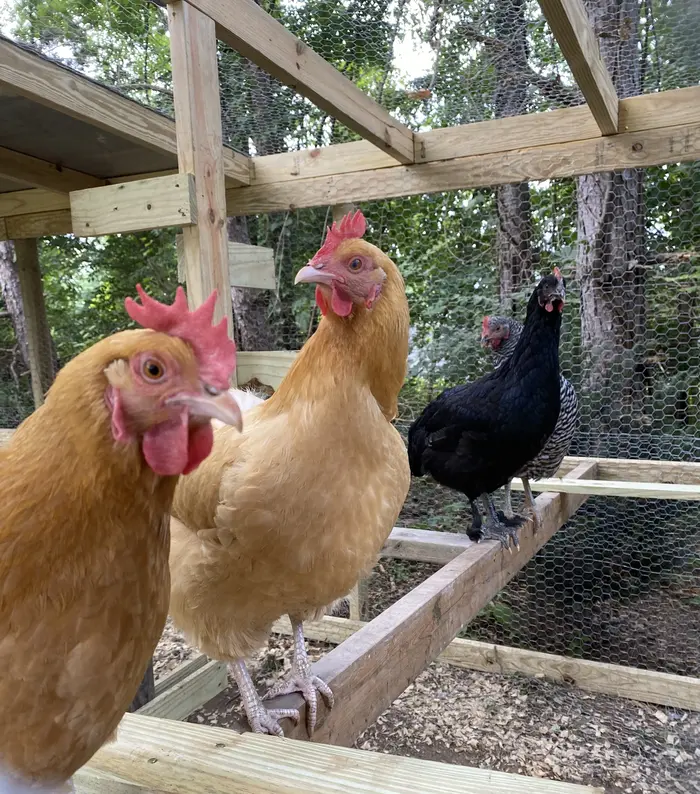
A hawk needs a clear flight path and an unobstructed target. Give your birds somewhere to shelter the moment they see a raptor overhead, and the hawk’s job becomes much harder. This is cheap, low-effort, and very effective when combined with other methods.
- Plant or position dense shrubs inside or just outside the run — chickens will instinctively bolt underneath when alarmed.
- Stack wooden pallets on their sides to create instant low-roofed shelters.
- Use a sheet of corrugated roofing or a tarpaulin slung low over part of the run or free-range area.
- Old garden furniture, upturned wheelbarrows, and sections of wooden fencing all work as impromptu cover.
The goal is to ensure no bird is ever more than a few metres from somewhere to hide. A hawk that identifies a target will still attempt a strike if the bird is exposed — but once the flock is under cover, most raptors abandon the attempt and move on.
Method 3 — Use a livestock guardian animal
A living guardian is the closest thing to a full-time raptor deterrent. Raptors are cautious predators — they rely on surprise and will rarely attack when a large animal is present.
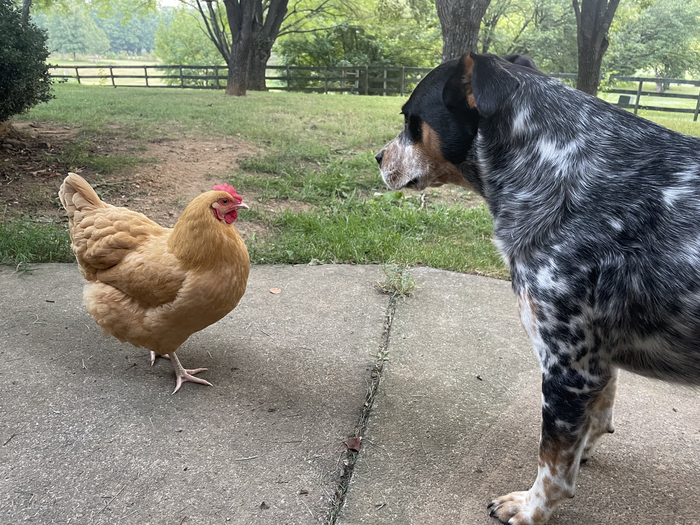
Livestock Guardian dogs (LGDs)
Breeds like the Great Pyrenees, Anatolian Shepherd, and Kangal are bred specifically to live with and protect flocks. A well-trained LGD will patrol the free-range area continuously, bark at aerial threats, and can reliably deter hawks and even eagles. They require significant investment in training and space, but for keepers who free-range large flocks, an LGD is genuinely transformative. For a deeper look at introducing guardian dogs to poultry and building a safe, harmonious relationship, see our guide on keeping the peace between chickens and dogs.
Roosters as hawk sentinels
A mature rooster will watch the sky and issue a distinctive alarm call at the first sign of aerial threat — giving hens time to scatter and hide. He may not stop a determined hawk, but his early-warning function is real and consistent. If local ordinances allow it, a single calm rooster is one of the easiest hawk deterrents available.
Guinea fowl
Guinea fowl are notoriously loud and aggressive towards anything they perceive as a threat — including low-flying raptors. A small guinea fowl patrol (3-6 birds) mixed into a free-ranging flock functions as a living alarm system. They are not for everyone — they are vocal and can roam far — but they are highly effective.
Method 4 — Lock hens in before dusk (the owl defence)
Owls hunt from approximately 30 minutes before sunset through to dawn. A hen on the roost inside a secure, enclosed coop before dark is essentially invulnerable to owls. A hen still in the run at dusk is at real risk — particularly if the run has gaps larger than 1 inch that an owl can reach through.
- Set a consistent lock-up routine: hens in the coop and door closed before sunset, every evening without exception.
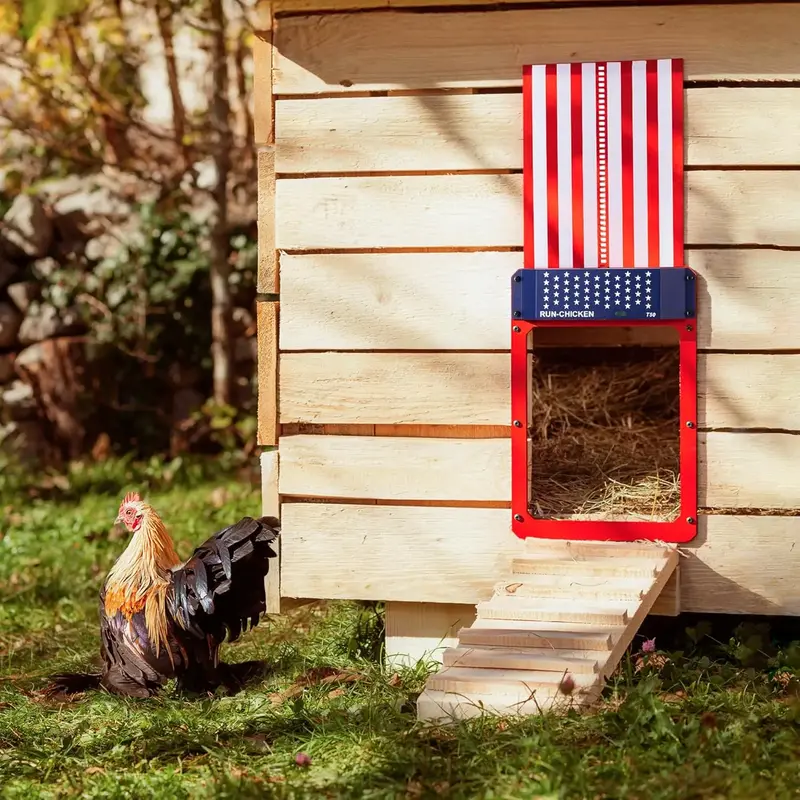
- Use an automatic coop door with a light-sensing timer — it eliminates the human error that leads to most owl attacks. Set it to close 30 minutes before local sunset time.
- Check the run for gaps larger than 1 inch (25mm). Hardware cloth with 1/2-inch mesh is owl-proof; chicken wire and standard netting are not.
The automatic chicken door is one of the most practical predator-prevention investments available for backyard keepers. Once set, it requires no daily input and eliminates the single most common cause of overnight losses. If you’re still deciding which model to choose, our guide to the best automatic chicken doors compares the top options and explains the features that matter most for security and convenience.
Method 5 — Limit free-range to lower-risk times and supervise
Hawk attacks are not uniformly distributed across the day. Red-tailed hawks — the most common threat in most of the US — are most active from mid-morning to early afternoon. Early morning and late afternoon are lower-risk windows.
- Free-range in the early morning (sunrise to 10am) when hawk activity is lowest.
- Bring birds in or confine to a covered run for the 10am–3pm window during peak summer months.
- In autumn and winter, canopy loss removes natural overhead cover — reduce unsupervised free-range time accordingly.
- Supervise actively when birds are in open areas. A human presence is itself a deterrent — raptors are far less likely to attack when a person is visible.
This approach is not about eliminating free-range entirely — it is about choosing when and where your birds roam based on real risk. A 2-hour supervised morning session is safer than an all-day unsupervised roam.
Method 6 — Deploy visual deterrents
Raptors are intelligent and cautious. They avoid areas that signal danger. Visual deterrents exploit this — but they must be used correctly or hawks will quickly learn they are harmless.
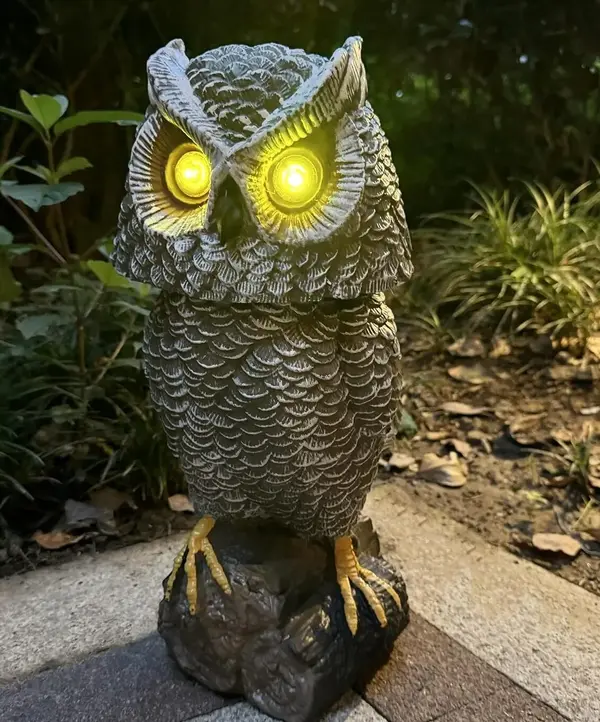
- Owl decoys: hawks are territorial and will avoid areas where they see a perched “owl” — but only if the decoy MOVES. A static owl decoy becomes invisible to a hawk within a few days. Use a solar-powered owl decoy with a moving head, or physically relocate it every day or two.
- Reflective tape and CDs: strands of reflective tape hung at chicken height, or old CDs suspended on string, create unpredictable flashes of light that unsettle raptors. Inexpensive and surprisingly effective, especially in open areas.
- Predator-eye balloons: large inflated balls with eye patterns printed on them. Move them regularly — same principle as the decoy.
- Motion-activated sprinklers: startle raptors on the ground or low approach. Also useful for ground predators.
Key rule: rotate and move all deterrents every 2-3 days. A hawk that observes a static threat for several visits will eventually ignore it. Movement and unpredictability are what maintain the deterrent effect.
Method 7 — Remove what attracts raptors to your property
Raptors are opportunists. They find a territory productive and return repeatedly. Managing what attracts them — beyond the chickens themselves — reduces overall raptor pressure on your property.
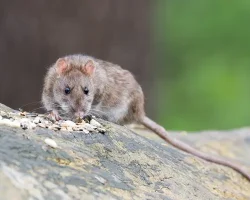
- Store feed in sealed containers and clean up spilled grain promptly. Spilled grain attracts rodents; rodents attract raptors. A property with an active rodent population will draw hawks and owls independent of your flock.
- Remove tall, isolated perching trees or structures near the free-range area. Hawks hunt from high perches — eliminating obvious vantage points within 50 metres of the run reduces opportunistic attacks significantly.
- Do not leave dead birds or carcasses accessible. The smell draws scavenging raptors and other predators.
- Keep the free-range area free of long grass and dense ground cover near the boundaries — ground-level approaches by Cooper’s hawks and similar species become harder without launch cover.
As USDA Wildlife Services notes, integrated non-lethal deterrence — combining exclusion, habitat modification, and guardian animals — is the most reliably effective approach to raptor management around poultry. Single-method approaches rarely hold up long-term against persistent raptors.
What to do immediately after a hawk strike
If a hawk has taken or injured a bird, act quickly:
- Check all remaining birds for injuries — even hens that appear unharmed may have talon puncture wounds hidden under feathers. Part the feathers on the back and neck carefully.
- Separate any injured bird immediately. Chickens will peck at wounds on injured flockmates. Isolate and clean wounds with dilute iodine or wound spray, and consult a vet if punctures are deep.
- Confine the flock to the covered run for the rest of the day — and the following day. A hawk that has successfully killed will return within 24-48 hours.
- Audit your setup. The hawk found a weakness — identify it before the birds go back out. Look for gaps in overhead coverage, perching spots nearby, or areas of exposed open ground.
- Do not attempt to trap or harm the hawk. See the legal note below.
Hawks and owls are federally protected — deterrents only
It is illegal under US federal law to kill, capture, harm, or possess any hawk or owl, including their feathers, eggs, or nests — regardless of the circumstances.
All hawks and owls in the United States are protected under the Migratory Bird Treaty Act (MBTA) of 1918, administered by the US Fish and Wildlife Service. Violating the MBTA carries fines of up to $15,000 and up to six months imprisonment per offence — even when acting to protect livestock.
The only legal options are the non-lethal deterrents described in this guide. A USDA Wildlife Services agent can help with depredation permits in extreme cases — but these are rarely granted for backyard poultry situations and do not authorise lethal control without specific approval.
The practical message: protect your flock with the seven methods above. They work. Lethal control does not — it is illegal, and raptors are territorial enough that removing one individual simply opens the territory to another.
Frequently asked questions
What is the best way to protect free-range chickens from hawks?
The most effective combination is a livestock guardian animal (dog or rooster) plus overhead netting over at least part of the free-range area, with dense shrub cover throughout. No single method beats the combination of a vigilant guardian and physical overhead protection.
Will a rooster protect hens from hawks?
A rooster provides real early-warning value — he will spot and alarm-call at aerial threats, giving hens time to hide. He is not physically capable of stopping a large hawk, but his sentinel behaviour meaningfully reduces the risk of a successful strike. Combined with cover and overhead netting, a calm rooster is a valuable part of the defence layer.
Can hawks get into a closed chicken coop?
Not through solid walls. A secure coop with no gaps larger than half an inch is safe overnight. The risk is runs with gaps, open pop-holes after dusk, or incomplete overhead coverage. Hardware cloth with half-inch mesh is the reliable standard — chicken wire is not.
Do wind chimes or shiny objects stop hawks?
Temporarily. Raptors are intelligent and habituate quickly to static, predictable objects. Wind chimes, CDs, and reflective tape lose most of their effect within a week if not moved or rotated. Use them as one layer of a multi-method approach, not as a standalone solution.
Is it legal to shoot a hawk that is killing my chickens?
No — in the United States, all hawks and owls are federally protected under the Migratory Bird Treaty Act regardless of the circumstances. Shooting, trapping, or harming a raptor is a federal offence. The only legal response is non-lethal deterrence.
When are hawk attacks most likely?
Red-tailed hawks — the most common US raptor threat — are most active mid-morning through early afternoon, with a peak between 10am and 2pm. Cooper’s hawks can hunt in more confined spaces and at lower light levels. Owls are active from dusk to dawn. Risk is highest in summer when flocks are free-ranging most, and in winter when leaf cover is gone.