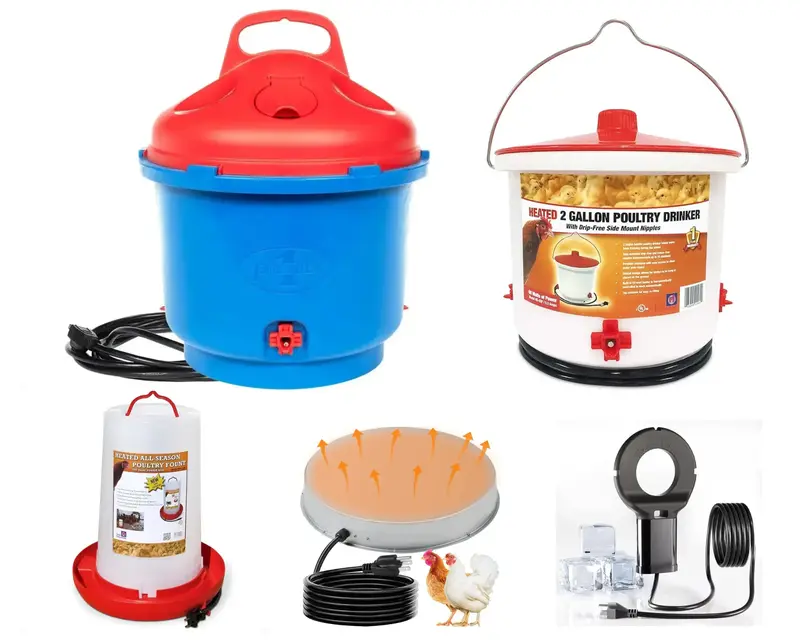
Anyone living in a colder climate should check out my top 5 heated chicken waterers. I guarantee that they’ll make life much easier during those harsh winter months. If you’re from the Midwest or New England, you’ll know how tricky it can be to care for your chickens during periods of heavy snowfall and ice.
A good heated chicken waterer will ensure that your birds can drink, even in freezing temperatures. It’s better for your hen’s health and means you won’t need to spend half an hour trying to break ice from their water containers! In this guide, we’ll look at some of the best products on the market, with different styles across a range of budgets. All these heated chicken waterers require a power source.
Comparison of the 5 Best Heated Chicken Waterers
I selected the best heated chicken waterers based on durability, effectivity, and ease of use. After extensive research, hands-on testing, and reviewing real user feedback, I’ve rounded up the top options to keep your flock’s water from freezing this winter. Of course, the best choice for your chickens depends on your specific setup and climate. To help you decide, we’ve included a handy comparison table below.
1. Premier 1 All-Season Heated Chicken Waterer | 2. Farm Innovators Heated Chicken Waterer | 3. Farm Innovators Heated Open Chicken Waterer | 4. Heated Poultry Waterer Base Zoblise | 5. Submersible Chicken Water Heater GUEOQTC | |
 |  |  |  |  | |
Awards |  |  |  | ||
Price | $$$ | $$ | $$ | $ | $ |
Check price at | |||||
Overall Rating | 9.8 | 9.2 | 8.7 | 7.5 | 6.5 |
Star Rating | |||||
Reasons to buy | • Works well in extreme cold • Quick-fill cap for when the lid freezes to the waterer • High energy efficiency • Less cleaning than an open drinker • Safe, built-in thermostat | • Excellent quality to price ratio • Closed nipple drinker with low energy use • Stays clean for longer • Translucent bucket, easy to check water level | • Works well in mild winters • Good choice if you prefer an open drinker with a heated base all-in-one • Power is 100 Watt and can fit 3 gallons of water | • Low cost • Heat is spread evenly • Reasonable energy efficiency | • Defrosts water surfaces quite well • Low cost |
Reasons to avoid | • Higher price | • No quick-fill cap for easy refilling, the lid may freeze to the bucket | • Open waterer so more cleaning needed • Less energy effcient than closed waterers • Handle may become brittle over time | • Fitting chicken waterer needed • Effectivity and energy use also depend on added waterer type | • Not energy efficient • Does not spread heat evenly • Less effective than other options in extreme cold |
Bottom Line | This TOP PICK heated chicken waterer is most energy effcient and works in extreme cold | EDITOR'S CHOICE heated chicken waterer for en excellent quality to price ratio | This OPEN HEATED CHICKEN WATERER is a good choice for mild winters | Our BUDGET PICK heated poultry waterer base is ideal if you already have a waterer | This SUBMERSIBLE WATER HEATER can be used to de-ice the water surface |
Rating categories | |||||
Durability | 9.5 | 9 | 9 | 8 | 7 |
Effectivity | 10 | 10 | 9 | 7.5 | 6 |
Ease of use | 10 | 9 | 8 | 7 | 6.5 |
Specifications | |||||
Type of drinker | Nipples | Nipples | Open | - | - |
Brand | Premier1 | Farm Innovator | Farm Innovator | Zoblise | GUEOQTC |
Dimensions (Height x Diameter) | 14" x 13" | 11" × 12" | 20" x 13,5" | Diameter 15" | Heat element is 7.44" x 4.6" x 0.94" |
Capacity | 3 gallons | 2 gallons (also 3) | 3 gallons | claimed 4 gallons | claimed 2 gallons |
Power | 100 Watt | 60 Watt | 100 Watt | 130 Watt | 500 Watt |
Thermostatically controlled | Yes | Yes | Yes | Yes | Yes |
Energy efficient | ++ | ++ | + | +/- | - |
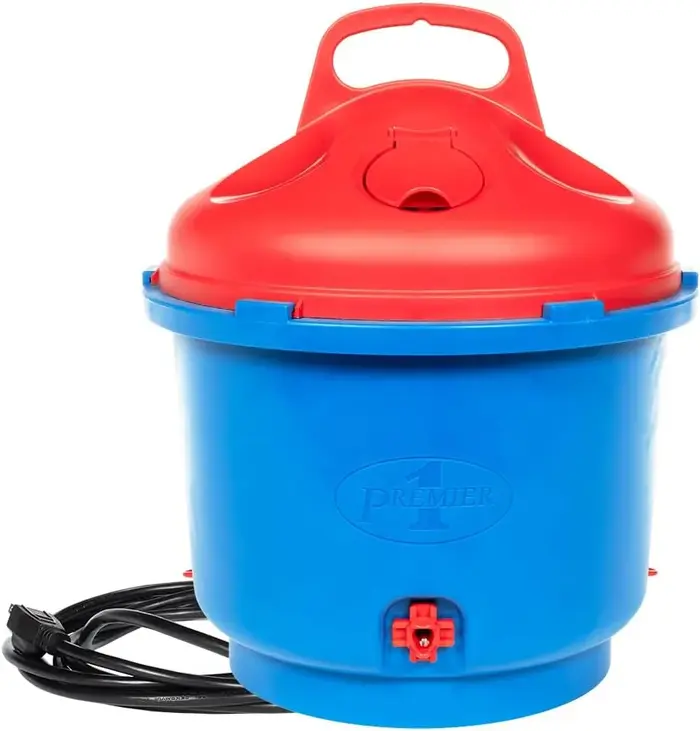
1. All-Season Chicken Waterer Premier1
- Works well in extreme cold
- Quick-fill cap for when the lid freezes to the waterer
- Low energy use
- Needs less cleaning than an open drinker
- Safe, built-in thermostat, no overheating
- Higher price
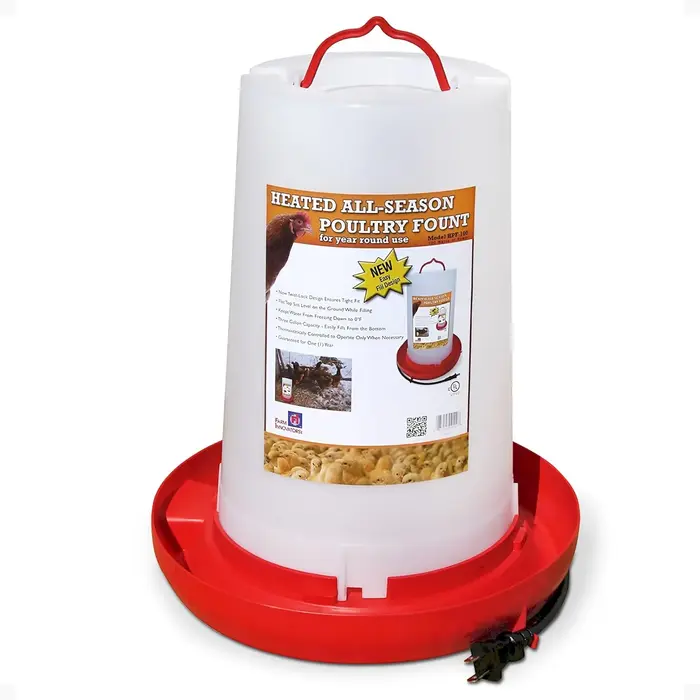
This TOP PICK heated chicken waterer is most energy effcient and works in extreme cold
The Premier 1 Heated Chicken Waterer is my top pick available right now. This heated chicken water is truly outstanding and will work in extreme conditions up to -20°F. It has a built-in thermostat that will automatically turn on the heating element when the water temperature drops below 40°F. It will shut off instantly when it goes back up to 60°F. This means that your chickens will always have access to suitable drinking water.
One of my favourite touches is the quick-fill cap. A common issue with heated waterers is that the lid can freeze to the basin or bucket during extreme cold. This defeats the purpose of the heated waterer because you can’t refill it, and even worse, you get frozen fingers! Luckily, this hinged cap enables users to easily fill the basin from a hose or tap. It’s simple but brilliant and shows their attention to detail.
This heated chicken waterer holds up to three gallons. It’s extremely energy-efficient, so you don’t need to worry about it guzzling up your dollars. Yes, the initial outlay is high because it’s not the cheapest waterer. But you can use it all year round. Simply detach the electrical cord during the warmer seasons and use it as a regular waterer. Also, you can hang this waterer or leave it freestanding, which is very convenient.
I mentioned the thermostat earlier, but don’t forget that this is a great safety feature because it prevents the waterer from overheating. There’s less risk of electrical damage to your birds or chicken coop. Meanwhile, the cable is chew-resistant, which is essential in winter. There’s a greater risk of cheeky rodents seeking refuge from the cold inside your coop, so it’s always worth considering.
One happy customer said the following: “Best purchase for my chickens. Sturdy, clean, no algae buildup, it’s covered, and the training took literally one day. Easy! Trained 2 hens to drink from and the rest followed.
Finally, this is a nipple drinker, so it’s much cleaner to use than other styles of waterer. Most experienced hobbyists will agree that chickens are messy eaters and drinkers so this is very helpful. They also provide replacement nipples in case of wear and tear. Premier 1 advises situating the water out of direct wind to preserve the nipples for longer. All in all, I can’t recommend this product highly enough!
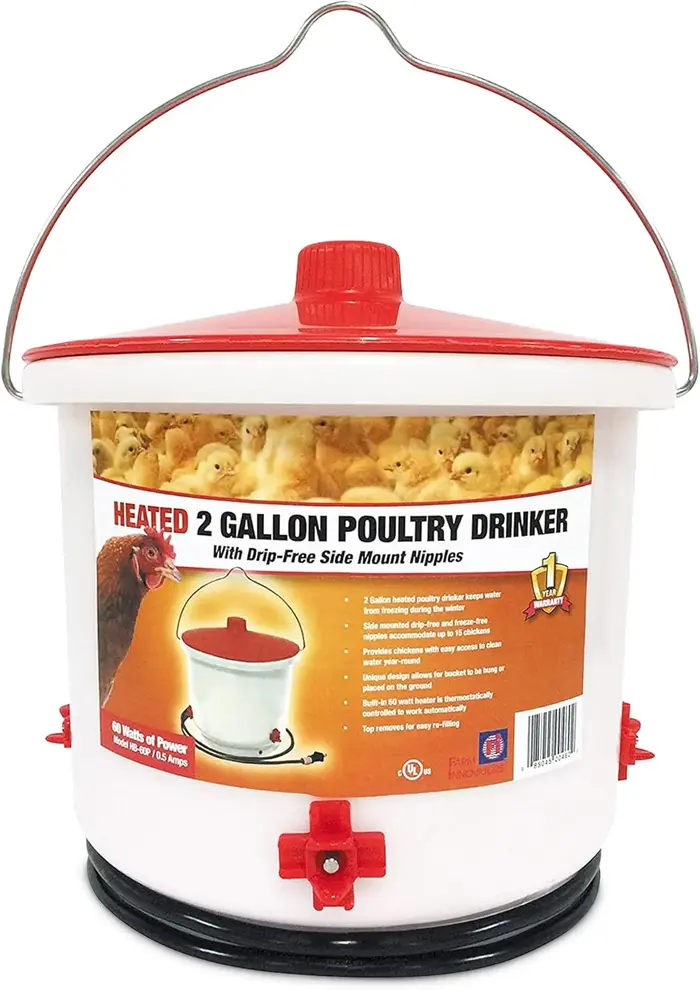
2. Heated Chicken Waterer Farm Innovators
- Excellent quality to price ratio
- Closed drinker with nipples and high energy efficiency
- Stays clean longer than open drinkers
- Translucent bucket, easy to check water level
- No quick-fill cap for easy refilling
EDITOR'S CHOICE heated chicken waterer for en excellent quality to price ratio
The Farm Innovators Heated Chicken Waterer is another great option. It’s the editor’s choice because of its many outstanding features. One of the reasons I rate it so highly is because of the price-to-quality ratio. The manufacturers sell both two-gallon and three-gallon models, so you can choose the one that’s appropriate for your backyard flock.
Again, this heated chicken waterer also has a thermostat to regulate the temperature. This makes it a safe and easy product to use around your backyard flock. The 60-watt drinker will automatically activate in sub-zero temperatures to stop your bird’s water from freezing. I appreciate how little energy it uses because many cheaper chicken waterers aren’t so efficient.
It has a translucent bucket, so it’s very simple for users to see the water level. There is also a removable lid for easy refilling; however, it lacks the quick-fill cap of the Premier 1 Waterer, so it may freeze to the container. However, if you keep topping up the water level, it shouldn’t cause you any issues. Nonetheless, this is a great product in its own right. It’s very durable, and you can hang it from its handle so it’s easy for your chickens to access.
This is also a nipple-drinker, so it’s a very clean option. There’s less risk of the birds spilling their water in their food, for example, or messing the coop’s floor. I should note that some users have complained that it may occasionally leak. Be careful when setting it up to reduce the risk.
A happy buyer wrote: “Used this waterer for an entire winter and it held up well. It’s well put together with no issues after six months of use. Had a week of sub-zero temperatures this past winter, including overnight lows that averaged -7 degrees, and the water never froze.”
It’s not a premium option like the Premier 1 Waterer, but it’s outstanding value for money and could be a key part of your winter coop inventory.
3. Open Chicken Waterer Farm Innovators
- Works well in mild winters
- Good open drinker with heated base, all-in-one
- Power is 100 Watt and can fit 3 gallons of water
- Open waterer so needs to be cleaned regularly
- Higher energy use than closed waterers
- The handle may become brittle over time
This OPEN HEATED CHICKEN WATERER is a good choice for mild winters if you prefer an open drinker
Farm Innovators struck gold again with this superb open Chicken Waterer. This is superb for milder winters. If you’re looking for an open waterer, it is one of the better options. It’s a 100-watt waterer too, but slightly less energy efficient than their nipple-drinker style. However, this is offset by the reality that you’re not going to use it in extreme conditions.
One potential issue is that you must fill this waterer from the bottom because it’s slightly time-consuming. This may even mean bringing it indoors if your outdoor faucet freezes in severe conditions. A solution is to fill a water bottle in your kitchen first before bringing it outside to conveniently refill the waterer.
Another potential issue is that some users complain that the handle becomes brittle over time. There are reports of it snapping eventually. Remember, it may degrade under the sun too, so be careful when picking it up, especially if it’s full. That’s why I recommend placing it on a flat surface instead of hanging it from the handle. The cords may also suffer damage over time, which could be a hazard, but they are replaceable.
However, the best part about open chicken waterers is that they’re more basic than nipple-drinkers. It’s usually relatively easy to convince your birds how to use them. Furthermore, this product is typically available for a decent price. Available in two and three-gallon sizes, I’m confident it will serve your needs.
One confirmed buyer wrote: “Having a reliable heated waterer is absolutely essential for keeping my chickens healthy and productive, especially during the harsh Texas winters. This Farm Innovators waterer did exactly what it was supposed to do.”
4. Heated Chicken Waterer Base Zoblise
- Low cost
- Ideal if you already have a fitting chicken waterer
- Heat is spread evenly
- Reasonable energy efficiency
- Fitting waterer not included
- Energy use and effectivity depends on type of waterer added
Our BUDGET PICK heated poultry waterer base is ideal if you already have a fitting waterer
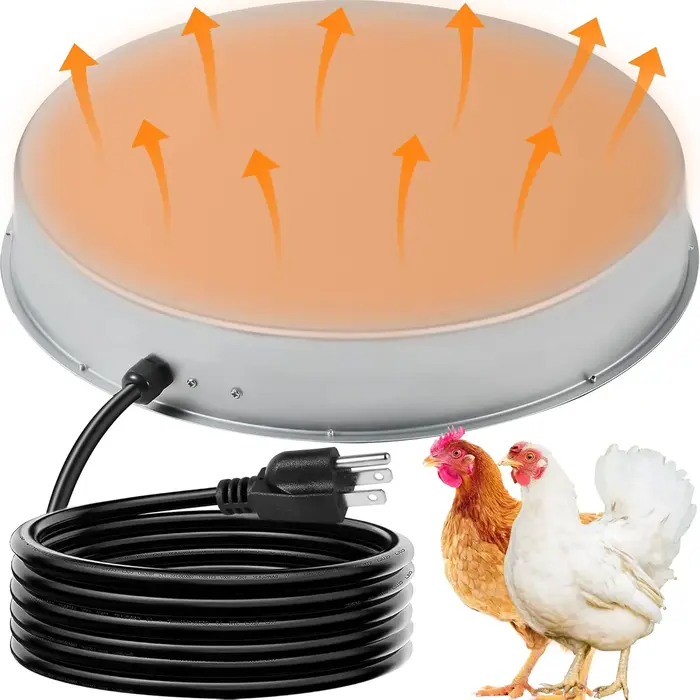
If you’re searching for an outstanding budget option, look no further. This heated chicken waterer base offers a great alternative to buying a conventional chicken waterer. This is a very clever solution because you can fit it during the colder months and remove it when the weather improves.
A thermostat automatically activates when the temperature drops hits 35°F. Zoblise, the manufacturer, maintains that it will not overheat the water and ensure that the chickens stay safe. This can be an issue with cheaper products, so always check their certifications first. It will also automatically deactivate when the temperature goes above 77°F. This reduces the risk of evaporation and the number of times you’ll need to refill your waterer. Just as importantly, it’s also kinder on your electricity bills!
There are a few points to consider before getting this waterer base. First, you obviously need an appropriate-sized waterer to use with it. I don’t advise using it with an open waterer because it’s not as energy-efficient. It’s much better to get a nipple-drinker system. Some hobbyists may think that it’s more convenient just to buy a regular heated chicken waterer.
However, if you already bought a standard waterer first and suffered the consequences of freezing conditions, this could be your savior! It’s available in several different sizes, from 11 to 15 inches, and is made of galvanized steel. The good news is that you can also use it outdoors and that it’s relatively robust.
This verified purchaser wrote: “We live in Minnesota and needed a warmer to keep the chickens’ water from freezing. This worked great – keep the water at the right temp and never froze.”
In short, if you’re looking for a budget accessory, this is an excellent option!
5. Submersible Chicken Water Heater
- Defrosts water surfaces quite well
- Low cost
- Not very energy efficient
- Does not spread heat evenly
- Less effective than other options, especially in extreme cold
This SUBMERSIBLE WATER HEATER can be used to de-ice the water surface
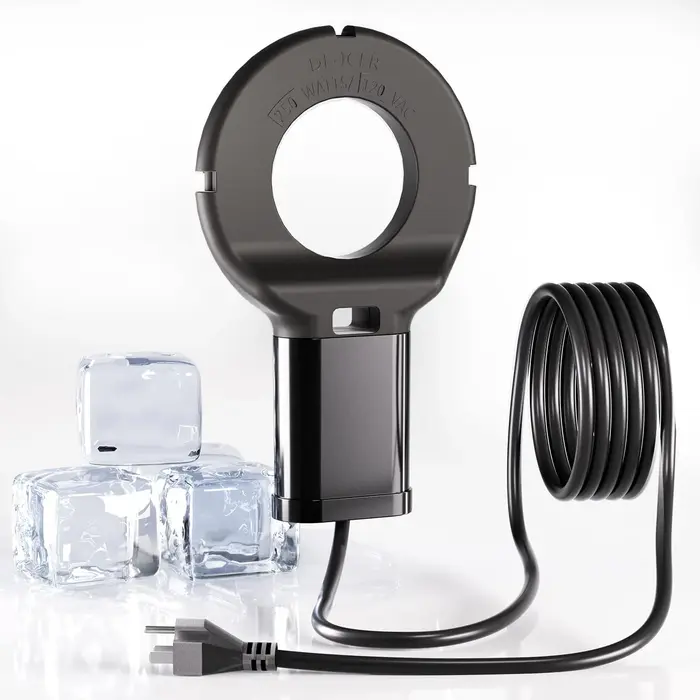
For the sake of being thorough, I’m also including this submersible chicken water heater as a potential option. I’ll be completely honest, it’s not my favourite solution, but I recognize that some hobbyists love these de-icers.
It’s different from the previous systems because it’s a separate de-icing device. Use it by submerging it in your chicken’s water before it freezes. A thermostat automatically activates the de-icer when the temperature drops below 35°F. Meanwhile, it will instantly switch off at 77°F. As you’d expect, it’s waterproof and peck-proof, so your birds will stay safe.
This water heater has a 9.8-foot cord, so it will be easy to connect it to an electrical supply. It’s unlikely you’ll need an extension cord if you’re keeping backyard chickens! The heater’s shell is aluminium and it has a durable anti-rust coating for longevity. Another advantage is that it offers more flexibility than the other products in this guide. You can also use it with bird baths and ponds, as well as poultry drinkers.
However, there are some cons. This 500-watt device is hungrier than the previous options, so running it can be very expensive. I don’t advise it for extreme weather conditions because it’s less effective. Remember, it’s better at de-icing than preventing the water from freezing. Another potential issue is that it’s more efficient in two-gallon containers, so it may not work well in a bigger drinker.
You’ll also need to clean the contaminants off the surface of the water after using this de-icer. It’s a decent backup option to have, but personally, I think it’s easier to get a ready-made drinker that does everything.
This verified buyer wrote: “This bird bath heater works great. It keeps the water from freezing even in zero-degree weather here in the Midwest. We have had it for a couple of months, and it is still working perfectly.”
If you’re living in a milder climate that sometimes gets harsh winter weather, this may fit your needs. But for those of you in Minnesota, Maine, or Vermont, I’d advise getting a dedicated heater waterer.
Features To Consider When Choosing a Heated Chicken Waterer
When buying a heated chicken waterer, there are a couple things to consider first. A lot of questions pop up in my mind when you would ask me for my advice. Question like: Do you already have an existing waterer or not? How cold can it get in winter? Are you focused on quality or also on cost? How many chickens do you have? And so on. In this section, I will explain more about the features to consider before you purchase a chicken waterer. I want to make sure we consider not only your flock’s needs, but also yours!
Type of Drinker
There are several types of heated chicken waterers on the market:
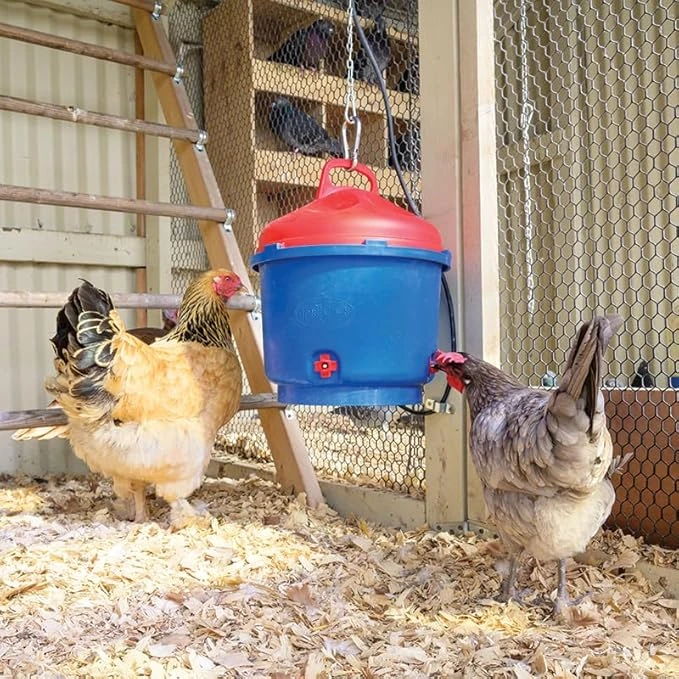
- Closed drinker with nipples is by far my personal favorite. They are often most effective and energy efficient, since they lose the least amount of heat. Also, the water stays clean. You might need to train your hens to drink from drinking nipples, but they learn rather quickly.
- Open drinker with an open drinking base works quite well. But, compared to closed drinkers with nipples, they are less energy efficient, and you need to clean them more regularly. Droppings, feed, litter, and dirt can end up in the drinker. Since heat is added, bacteria will love this and grow quickly.
- Heated base where you put your existing waterer on. It is less convenient than an all-in-one heated open drinker, but might be cheaper if you already have drinkers. Be aware that chickens can accidentally push the waterer off the base.
- Submersible water heaters you can hang in your existing drinkers to de-ice the surface. I am not a big fan of these, since they hang loose in your open waterer, are less effective, and will give you a higher electrical bill.
My recommendation would always be to choose the first option: a closed drinker with nipples. If you choose a heated one, you can simply unplug it in summer and use it all year long.
Capacity and number of hens
With this I mean how many liters or gallons fit in the heated drinker, or can be heated using a heated base or submersible heater. The capacity you need depends on the number of hens you have, their size, and their feed intake. Why feed intake? Because as a rule of thumb: chickens drink 2 x as much as they eat. Only in hot weather, it may be 3 x or even 4 x.
One laying hen eats about 4.3 ounces (about 120 grams) of feed per day, and drinks 1 cup per day, which is about 0.063 gallons (240 ml). So if you have 10 laying hens, they eat about 43 ounces (1,2 kg) per day, and drink 0.63 gallons (2,4 liter) a day. If we aim at a water supply of 3 days for 10 hens, this means 3 x 0,63 = 1,9 gallons, so a 2 gallon drinker is enough. If we aim at a capacity of about 4 days of water, which may only last 2 days in summer, it is 4 x 0,63 = 2,5 gallons, so a 3 gallon waterer for 10 laying hens.
Not just capacity matters, but also drinking space. Are there enough nipples? Is there enough space for a few hens to drink comfortably? Sometimes, it is better to choose 2 waterers of 2 gallons instead of 1 waterer of 3 gallons. This gives the chickens lower in the pecking order a better chance to drink comfortably without being chased away.
Power vs effectivity
The amount of Watts a heated chicken waterer can supply says something about the heating power. However, it doesn’t say anything about heat loss. An open drinker with a higher power can perform less, and be less effective, than a closed drinker with lower power that loses less heat. Also, if you use submersible water heaters, the heat is often not evenly spread. So, I would recommend to not just look at power, but also ask yourself if a certain waterer loses heat easily or not? Is it insulated? In my comarison table, I made it easy for you and rated effectivity of each heated chicken waterer.
Energy efficiency
You might already have thought about it when reading the previous section: a high power but also a high heat loss, means a very bad energy efficiency. You might think you chose a budget option to limit costs, until you see the electrical bill… Only households with solar energy might not care, if they have a battery. After all, in winter solar panels will produce less energy. So, consider energy efficiency before choosing what is the best buy for you.
Safety and Thermostatical control
A built-in thermostat is an important safety feature in a heated chicken waterer. It automatically turns the heating element on when temperatures drop near freezing and shuts it off when it’s warm enough. This lowers the risk of overheating and is safe for your hens. Also, it prevents unnecessary energy use and makes sure your chickens always have access to liquid, unfrozen water. Thermostatically controlled waterers are especially useful in areas with fluctuating winter temperatures, as they maintain a consistent water temperature and require little to no monitoring. Fortunately, most heated poultry waterers on the market are thermostatically controlled, but always double-check before you buy.

How We Tested
To create this list, we combined hands-on testing with deep research into customer reviews, product specifications, and real-world performance. We read through hundreds of verified customer reviews and consulted chicken-keeping communities to understand longer-term issues, like durability, features, energy efficiency, and ease of use.
Here’s what we focused on:
- Durability: We considered the materials used, the quality of construction, and daily wear and tear.
- Effectivity: We looked at factors like the type of heater, power, and heat loss, and comments from users in extremely cold areas.
- Ease of Use: We took into account features such as a quick-fill cap, length of the power cord, etc.
- Price versus Value: Finally, we looked at what each product offered for its price, balancing performance, features, and durability.
The result is this list of heated chicken waterers that we’d trust our chickens to drink from during a cold winter.
Our Awards
Not all coops, or chicken keepers, have the same needs or budgets. That’s why, after testing and comparing, we’ve selected three standout products for special recognition. These picks reflect not just features and performance, but also price, ease of use, and real-world practicality.
Editor’s Choice: Best All-Around Value
The product that earns our Editor’s Choice strikes the perfect balance between quality and cost. It’s user-friendly, well-built, and does the job without overcomplicating things or breaking the bank. A great choice for most backyard chicken keepers.
Top Pick: Best Overall Performance
This award goes to the product that stood out for its combination of reliability, build quality, and features. It’s the one we’d recommend to chicken keepers who want a dependable, long-term solution that performs in all seasons.
Budget Pick: Best for Smaller Budgets
For those looking for a reliable product at a lower price point, our Budget Pick is ideal. It skips a few premium extras but still delivers solid performance and peace of mind at an affordable price.
Why Trust Chicken Clucks?
At Chicken Clucks, we know backyard chickens aren’t just animals. They’re part of the family. That’s why we’re committed to giving honest, practical advice that helps you keep your flock happy, healthy, and safe.
Every product we recommend is thoroughly researched, compared, and, when possible, tested in a real backyard coop. We don’t just rely on manufacturer claims. We dig into user reviews, speak with other chicken keepers, and consider long-term reliability, not just first impressions.
Behind Chicken Clucks is a fellow chicken keeper with a background in animal sciences and years of experience as a professional poultry expert. Whether you’re buying your first coop accessory or upgrading your setup, we write with you and your flock’s needs in mind. No fluff, no jargon, and no pressure to buy the most expensive gadget out there.
If we wouldn’t use it in our own coop, we won’t recommend it here.
FAQ About Heated Chicken Waterers
Do chickens really need a heated waterer in winter?
Chickens can survive cold weather, but water freezes quickly when temperatures drop. Heated waterers ensure your flock always has access to fresh, liquid water, which is crucial for drinking, digestion, and egg production. Even a short cold snap can freeze regular waterers overnight.
How do heated chicken waterers work?
Most heated waterers use an electric heating element to keep water above freezing. The heating element can be part of the heated waterer as an all-in-one solution, or separately, like a heated base or submersible heater. Many models include a thermostat, which automatically turns the heater on when temperatures fall near freezing and off when it’s warm enough. This keeps water from freezing while saving energy.
Are heated waterers safe for chickens?
Yes, if you choose a high-quality waterer and follow safety instructions. Look for certification and customer reviews, or simply buy one of my picks discussed in this article. Also, keep cords away from moisture, and ensure electrical connections are protected. Never use a damaged waterer, and unplug it before cleaning.
Can I use an extension cord with a heated waterer?
Yes, but only a heavy-duty, outdoor-rated extension cord designed for the wattage of your waterer. Avoid thin cords or long runs that could overheat. Always keep cords off the ground and out of the chickens’ reach.
What’s the best wattage for a heated chicken waterer?
Most 2 to 3 gallon heated waterers use 50–100 watts, depending on size and design. However, Wattage doesn’t say much about effectivity! Heat distribution and heat loss are equally important. An open drinker with a higher power but high heat loss can be less effective than a closed drinker with lower power that loses less heat. If you use a submersible water heater, the heat is often not evenly spread.
Should the waterer be inside or outside the coop?
Both options work, depending on your setup. Inside the coop, waterers are protected from wind and extreme cold, but can create extra humidity, or a mess if they are open drinkers. Outside, heated waterers must be weather-resistant and elevated to prevent spillage or dirt contamination.
Can I use a heated base with a plastic waterer?
Yes, many plastic waterers are compatible with heated bases. Make sure the base and waterer are the correct size and labeled as safe for this use, make sure the plastic doesn’t melt. Heated bases are an affordable way to prevent freezing without replacing your existing waterers.
How much electricity does a heated chicken waterer use per day?
With a thermostat, most waterers run only when temperatures approach freezing, so daily electricity use is low. Small models may cost just a few cents per day, while larger units may cost slightly more. Thermostats make them much more energy-efficient than constantly running heaters. However, keep in mind that heaters with high Watts but also a high heat loss might use more energy than you think.
Do I need to keep the heater on all the time?
No, a heated chicken waterer with thermostatic control only heats when needed. Even in very cold weather, the heater cycles on and off to maintain a safe temperature. Constant power is unnecessary and wastes energy.
How long do heated chicken waterers last?
With proper care, a good-quality heated waterer can last 5 to 10 years. Longevity depends on build quality, maintenance, and storage during off-seasons. Regular cleaning and checking electrical components will keep your waterer reliable year after year.
Conclusions
Keeping your chickens’ water from freezing in winter is essential for their health, hydration, and egg production. Heated chicken waterers provide a reliable, low-maintenance solution, ensuring your flock always has access to fresh water, even on the coldest days.
When choosing a waterer, consider factors like capacity, material, ease of cleaning, energy efficiency, and thermostatic control. The right choice depends on the size of your flock, your coop setup, your local climate, and your budget.
Whether you opt for a premium heated model, a budget-friendly option, or a heated base for an existing waterer, making sure your chickens never go without water is worth the investment. With a little planning and the right equipment, you can enjoy winter worry-free while your hens stay happy, healthy, and hydrated.
One last tip: Combine a good heated waterer with regular checks and winter coop maintenance to keep your chickens thriving all season long.