
Chickens, eggs, hatching, pecking. They sound like words that are related to chickens…. easy, right? Not really. If you are not a chicken enthusiast or farmer, it is very easy to get confused by the technical jargon surrounding chickens. To be honest, poultry farming has its own language, and if you are interested in raising, keeping, or learning about chickens, it is important to become familiar with some poultry terms.
So, I thought it might be time to compile a list of poultry terms. Some of these terms are simple, and some are a little more advanced, but I believe that this is the perfect guide for beginners or even the more seasoned pros who need a refresher.
So, without further ado, let’s get into the wonderful world of poultry terms!
The A to Z of Poultry Terms
A
Avian: This is the category that is related to birds, and all poultry falls under the avian category.
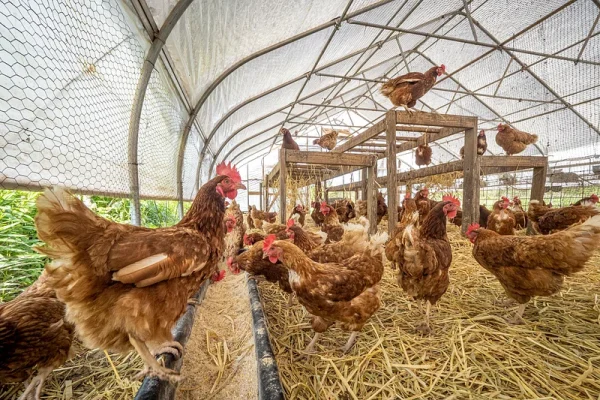
Aviary Housing System: a large bird enclosure, including multiple levels or tiers. Bird can jump or fly freely from tier to tier. It makes optimal use of the space.
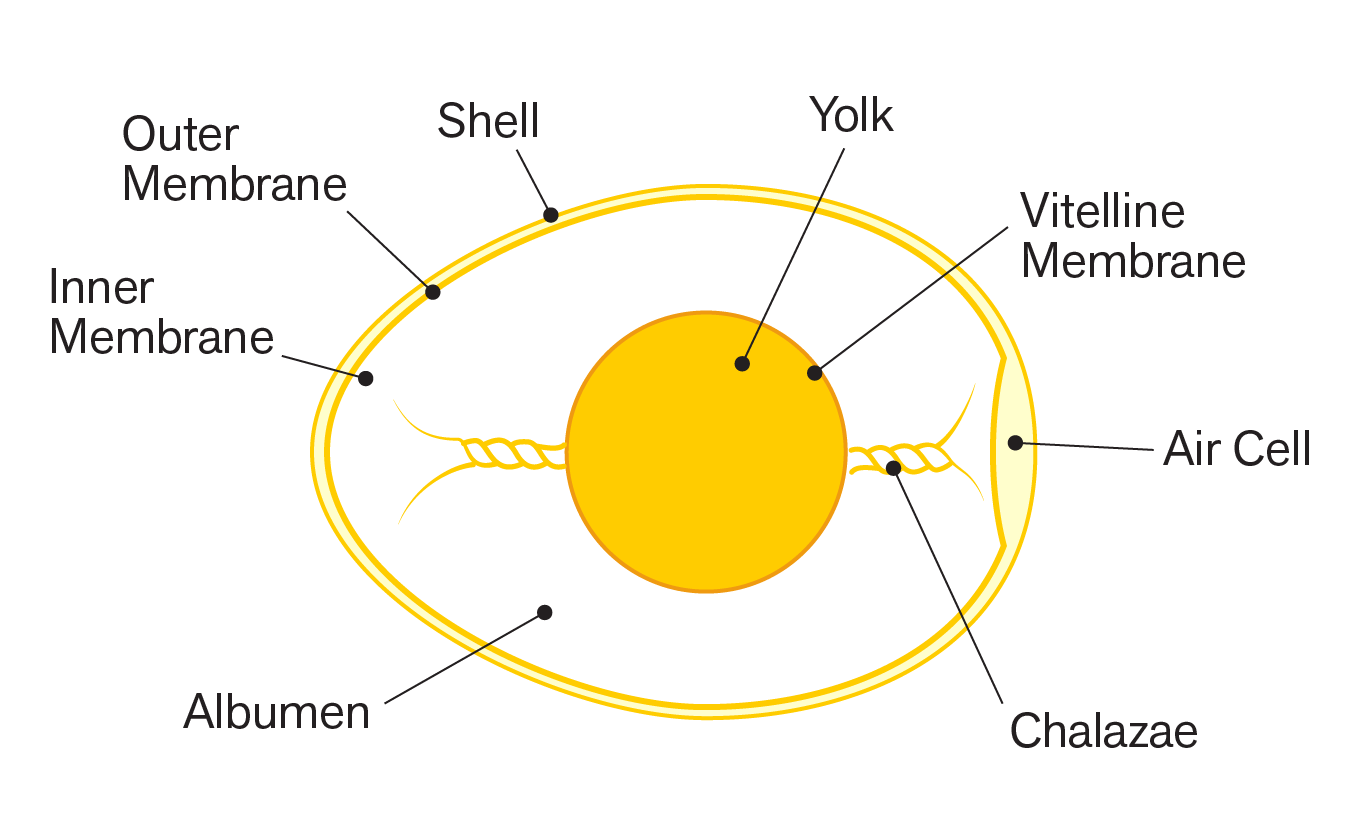
Air Cell: Between the eggshell and the egg white lies a small pocket of air. It is usually at the large end of the egg and grows bigger as the egg gets older.
Albumen: Also known as the egg white. It surrounds the yolk, is rich in water and protein, and is a key indicator of egg freshness. The firmer the albumen, the fresher the egg.
Ammonia Burn: This is often caused by poor ventilation and wet litter and causes damage to the bird’s skin and respiratory system. This is due to the high levels of ammonia that accumulate in the coop.
B
Bantam: This is a smaller version of a standard chicken breed and is a quarter to half the size of standard birds. Bantams are extremely popular when it comes to backyard flocks.
Beak Trimming: This is a controversial practice, and if done, it should be done carefully. A portion of the bird’s beak is trimmed to lessen aggressive picking or feather picking. I don’t recommend it.
Biosecurity: Measures taken to prevent the spread of disease, such as limiting new bird introductions, disinfecting boots and tools, and controlling rodents or wild birds. Strong biosecurity keeps your flock healthy and disease-free.
Breed Standard: A formal description of the ideal traits for a chicken breed, including color, size, comb type, and feather pattern. It’s used in poultry shows to judge chickens and guide breeding decisions.
Broiler: Broilers grow quickly and are usually ready for processing when they are 6 to 8 weeks of age. These chickens are raised specifically for meat production.
Broody Hen: These hens are, you guessed it, broody! A broody hen wants to hatch eggs and raise chicks. She will even sit on imaginary eggs and often becomes quite territorial.
Brooder: A piece of equipment that consists of a box and heating to maintain a constant warm temperature for baby chicks. Brooder lamps are also available, which you can hang above a small enclosed space.
Baby chicks need to be raised using a brooder or brooder lamp, since they are poikilothermic during their first days of life. This is a fancy way of saying they cannot maintain their own body temperature yet.

C
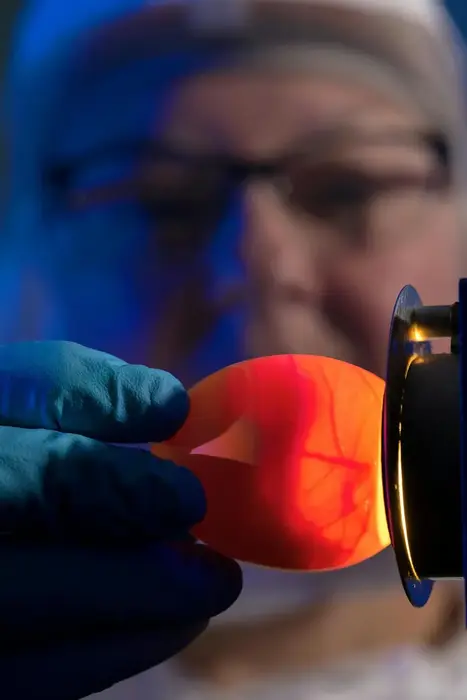
Candling: This is used to check embryo development or determine egg quality. It involves using light to examine the inside of the egg.
Capon: A castrated male chicken. Capons are very common in some culinary traditions since castration improves the quality of their meat.
Clutch: A group of eggs laid by a hen over several days. A broody hen will often sit on a clutch to hatch them, especially if she lays in the same nest consistently.
Coccidiosis: A parasitic disease that affects the intestinal tract. Most common in young chickens and can be deadly if left untreated.
Cockerel: A young male chicken under one year of age. As he matures, he’ll develop longer tail feathers, a larger comb, and may begin crowing or challenging other roosters.
Comb: This is the red, fleshy crest found on the top of a chicken head. Each breed of chicken has a different comb shape. The shapes can be single, pea, or rose.
Crop: Chickens have 3 stomach-like organs: the crop, gizzard, and proventriculus. The crop is a storage pouch that stores feed before it enters the gizzard. The gizzard grinds the feed into smaller particles. Afterwards, it enters the proventriculus, where stomach acid and enzymes are added, which are key for digestion.
D
Debeaking: The practice of trimming the tip of the beak to reduce aggressive pecking. It’s controversial, requires expert skills, and is mostly used in commercial farms. I would definitely not recommend it for backyard chicken keepers.
Down: Down is the soft and fluffy feathers that are found on chicks or under the outer feathers of adults. These soft feathers provide the chicken with insulation.
Dual-Purpose Breed: These are chicken breeds such as Rhode Island Reds and Plymouth Rocks that are suitable for both meat and egg production. They usually have moderate growth rates and good egg-laying capacity.
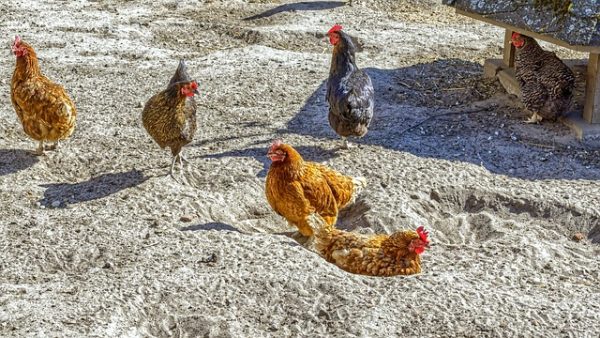
Dust Bath: A dry patch of dirt or sand where chickens roll and flap their feathers to clean themselves. This is natural behaviour that helps to remove parasites like mites or lice.
E
Egg Bound: This is when an egg is stuck in the reproductive tract, and the hen battles to lay an egg. Symptoms include lethargy and a swollen abdomen. This condition can be life-threatening and needs immediate attention.
Egg Tooth: A tiny, hard bump on the tip of a chick’s beak used to break through the eggshell during hatching. It falls off naturally a few days after the chick is born.
Embryo: The developing chick inside a fertilized egg. During incubation, the embryo forms organs, feathers, and a beak, eventually absorbing the yolk before hatching.
F
Feather Pecking: This is when birds peck at each other’s feathers. It can sometimes be aggressive and lead to bold patches and injury. Severe feather pecking is often a sign of stress or boredom. Unfortunately, once this behaviour starts, it is learned and very difficult to unlearn and stop.
Feed Conversion Ratio (FCR): The amount of kg’s of feed needed to produce 1 kg of meat or eggs. A lower ratio means a better efficiency. Professional farms achieve a low FCR by selecting an efficient breed, keeping temperature optimal, selecting the best feed, and overall good chicken management.
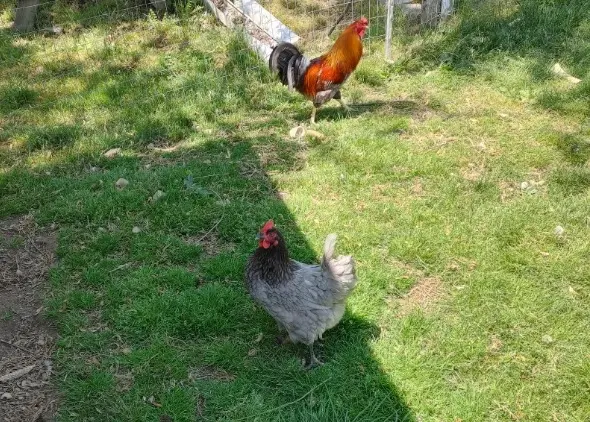
Free-Range: Chickens who have access to roam free in the outdoors are known as free-range chickens. It is a system that creates a more natural living environment for poultry.
G
Gallus Gallus Domesticus: The scientific name for domestic chickens.
Gizzard: One of the 3 stomach-like organs of birds. The gizzard grinds the feed into smaller particles. Birds often swallow grit or small stones to help the gizzard break down seeds and grains.
Grit: Birds need to eat grit or small stones to help the gizzard break down seeds and grains. It is insoluble and often consists of granite. There are 2 types of chicken grit: insoluble and soluble grit. The other type, soluble chicken grit, contains calcium and is necessary for layers to form the egg shell around an egg. It often consists of limestone or oyster shells.
Grower Feed: After the starter stage, chickens are fed grower seed with is specially formulated to help chickens grow before they read laying age.
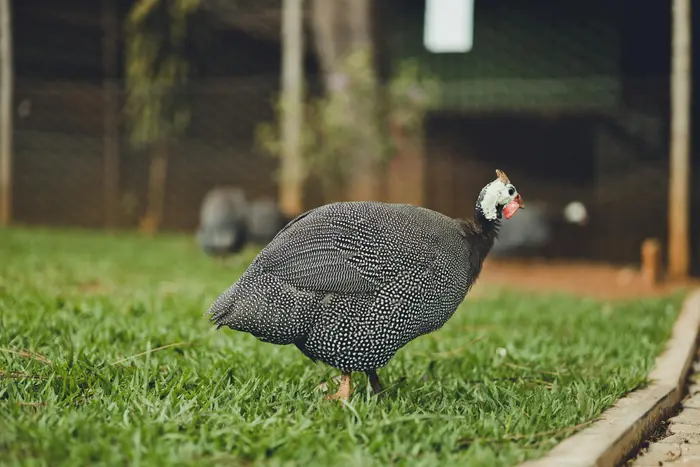
Guinea Fowl: Not chickens, but a different kind of bird. They’re more flighty and less tame than chickens. Fun fact: in the wild they are monogamous, meaning they mate for life
H
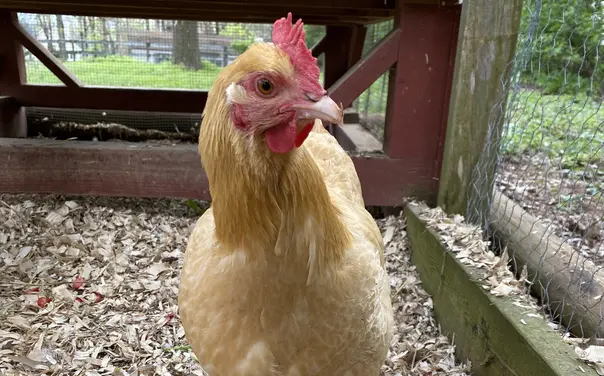
Hen: This is an adult female chicken, older than 16-20 weeks. A chicken younger than that is named a pullet.
Hatchery: This is a place where chicks are raised for sale and eggs are incubated and hatched.
Heat Lamp: A warming device used in brooders for baby chicks.
Heritage Breed: A traditional breed recognized by the American Poultry Association, naturally mating and capable of long life and productive laying. Popular heritage breeds include Wyandottes and Australorps.
Horizontal Nipple Drinker: A clean, low-waste watering system where chickens peck at a nipple to release water. They work well in winter setups, in heated chicken waterers.
Hybrid Layer: This crossbreed hen is bred for high quality egg production. These breeds include ISA Browns or Golden Comets.
I
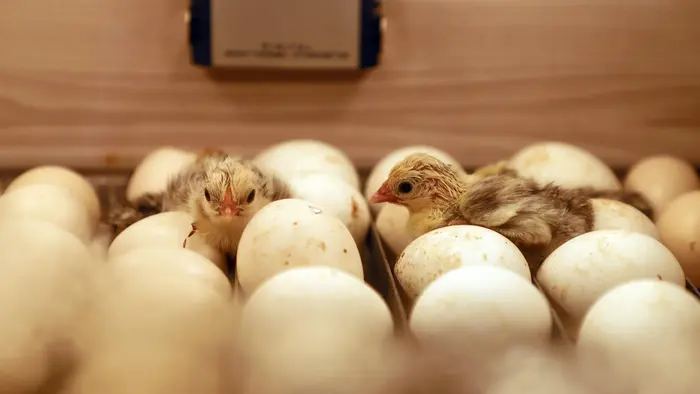
Incubation: This refers to when eggs are kept in warm and humid conditions so that they are able to develop into chicks. This can be done naturally by using a broody hen or artificially using an incubator.
Infectious Bronchitis: A viral respiratory disease in chickens that affects the trachea, air sacs, and sometimes the reproductive system. Symptoms include coughing, sneezing, nasal discharge, and reduced egg production. Vaccination and good biosecurity are key to prevention.
Infertile Egg: An egg that has not been fertilized by a rooster and cannot develop into a chick.
J
Jungle Fowl: These are the wild ancestors of chickens who have been domesticated. This breed of chicken is native to parts of Asia. The most commonly known jungle fowl is the Red Jungle Fowl.
K
Keel Bone: The breastbone of a chicken that runs along its chest. If the bone is strong and straight, your chickens are eating sufficient calcium. If not, provide a bit of extra soluble chicken grit for more calcium. Also, feel the chicken breast muscles that surround it. Healthy hens in good condition have a V shape. Too sharp means your hens are underweight, while too padded means they are overweight.
L
Layer: A hen that can produce eggs is known as a layer.
Layer Fatigue: A condition in high-producing hens where calcium or phosphorus reserves become depleted, leading to soft shells or laying issues. A balanced diet can prevent layer fatigue.
Layer Feed: Specially formulated chicken feed for egg-laying hens. It contains extra calcium to support strong eggshells, about 5 times as much as in a grower feed!
Litter: This material is kept on the coop floor and serves as chicken bedding. It is typically made from sawdust, wood shavings, or straw and helps to absorb moisture and limit odors.
M
Marek’s Disease: A viral disease that causes tumors and paralysis in chickens. Vaccination at hatch is the best prevention for backyard flocks.
Mites: Tiny parasites that live on chickens or in the coop. Common types include red mites and northern fowl mites. They cause irritation, feather loss, and reduced egg laying.
Molting: The natural process of shedding old feathers and growing new ones, usually once a year in late summer or fall. Chickens stop laying during molt to redirect energy toward feather regrowth.
Medicated Feed: Feed that contains medication, such as antibiotics, to prevent or cure disease. In most (but not all!) countries, antibiotics have to be prescribed by a veterinarian before use in water or feed.
N
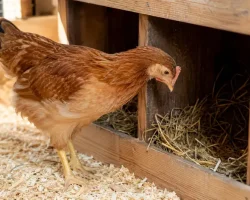
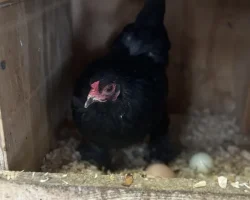
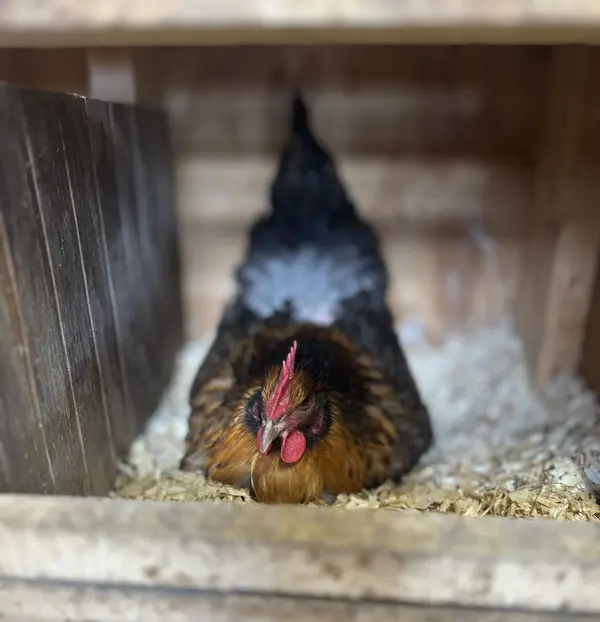
Nest Box: Cozy, little compartments in the coop where hens can lay their eggs privately and comfortably. Nesting boxes come in all shapes and sizes.
Newcastle Disease: A contagious viral disease that affects a chicken’s respiratory, digestive, and nervous systems. It causes symptoms like coughing, paralysis, and drop in egg production.
Non-Setter: A hen that doesn’t go broody or sit on her eggs.
O
Omega-3 Eggs: Eggs enriched with omega-3 fatty acids, often laid by hens that are fed flaxseed, fish oil, or special diets. These eggs are marketed for their heart-healthy benefits.
Orpington: This is a popular chicken breed since it is docile and a great choice for those who want to get both eggs and meat.
Osteoporosis: A condition that causes bones to become weak, brittle and even break. It occurs when the creation of new bone doesn’t keep up with the loss of old bone. It is common in older hens that lay a high number of eggs. Make sure they get enough calcium by providing special feed for older layers and soluble chicken grit, consisting of limestone or oyster shells.
Ovary: The reproductive organ in hens that produces yolks, and egg cells in humans. We typically have two.
Overcrowding: Keeping too many chickens in a small space. It leads to stress, aggression, disease, and feather pecking.
Oviduct: From the ovary, the yolk travels through this tube to become a complete egg. Each part of the oviduct adds a layer around the yolk: albumen (egg white), membranes, shell, and bloom.
P
Panting: Breathing fast and heavily. In chickens, it is a sign of heat stress. Since chickens don’t wheat, they pant to cool down in hot weather.
Pasty Butt: A condition in young chicks where droppings stick to the vent area, blocking the excretion of poop. It is a sign of stress. Pasty butt can be caused by being too cold or hot, an improper diet, or viral or bacterial infections that cause diarrhea.
Pecking Order: A social hierarchy amongst chickens, where chickens peck at each other to establish a clear leader, and until every bird knows its place. Occasional pecking is normal, but too much can be a sign of stress and lead to injury.
Perch: A horizontal rod or plate where chickens roost at night. It should be smooth, elevated, and wide enough to support their feet comfortably. Ideally, a perch is at least 4 inches (10 cm) wide. A flat edge, like a 2×4 piece of lumber laid flat, is a great option. Chickens can use rounded perches, but a slightly flattened surface is more comfortable and natural for their feet.
Pipping: The first crack a chick makes from within the eggshell during hatching.
Poultry: These are domesticated birds including chickens, ducks, turkeys, geese and quail that are raised for meat, eggs, or feathers.
Pullet: A young female layer chicken that is younger than 16 to 18 weeks, and is not laying eggs yet.
Q
Quarantine: This is the process of separating new or sick birds from the rest of the flock to prevent disease from spreading.
Quail: A small game bird often raised for eggs and meat. They can also be released into the wild.

R
Red mite: A blood-sucking parasite that hides in coop crevices during the day and feeds on chickens at night. Severe infestations can cause anemia or death. Clean coops regularly to prevent them.
Roosting: The natural behavior of chickens sleeping off the ground on a perch. Chickens prefer to roost at night, and adequate roosting space helps prevent squabbles.
Rooster: An adult male chicken. They are well known for crowing, strutting, and protecting the flock.
Run: The chicken run is an outdoor space attached to a coop where chickens can scratch, dust bathe, and forage. Runs should be predator-proof and have shade and enrichment.
S
Scratch grains: Should ideally only be used as a treat and should not make up a chicken’s complete diet. It is a mix of grains that are tossed onto the ground to encourage foraging.
Sour Crop: A digestive condition where food ferments in the crop, leading to a sour smell and sluggish behavior. Treatment may involve crop massage, withholding food, or veterinary help.
Starter Feed: Feed that is rich in nutrients and fed to baby chicks to help them grow strong and healthy.
T
Tapeworm: An internal parasite that affects the intestines of chickens. It can lead to weight loss, poor egg laying, and visible segments in droppings. Treatment requires deworming medication.
Turner: A mechanism in an incubator that rotates eggs automatically to make sure that they are developing optimally.
U
Uric Acid: A waste product in birds that appears as the white part of droppings. High levels can indicate kidney problems or dehydration.
V
Vent: The external opening of a bird’s cloaca. This opening is used both for egg laying and getting rid of waste.
Vaccination: Preventive treatment for diseases like Marek’s Disease, Newcastle Disease, or Infectious Bronchitis. Most hatcheries only sell vaccinated chicks, but it might be good to check which vaccinations are given. However, vaccinations are also required later in life.
W
Water Belly: A condition, also called Ascites, where fluid builds up in the abdomen, usually due to heart or liver issues. It causes a swollen belly and difficulty breathing.
Wattle: This looks like a comb and is the fleshy growth under a chicken’s beak. It is usually more pronounced in roosters.
Wry Neck: A neurological condition, also called “Torticollosis” or “stargazing”, where a chicken’s head twists to the side or upside-down. It may be caused by a vitamin deficiency or, more likely, disease. Diseases that might cause wry neck are for example Newcastle Disease, Marek’s Disease, and Botulism.

X
Xanthophyll: A yellow pigment found in plants like corn and marigold. Xanthophylls are often added to chicken feed to enhance yolk color.
Y
Yolk Sac: In chicks, the leftover yolk is absorbed into the abdomen during hatching. It provides nutrition for the first day or two of life, making immediate feeding less urgent.
Z
Zoonotic Disease: A disease that can be transmitted from animals to humans. Salmonella and Avian Influenza are good examples. Always consider hygiene and biosecurity when keeping chickens, not just for your chickens, but also for yourself!
Final Thoughts
Understanding poultry terms can sometimes feel like you are learning a whole other language. Fortunately, once you get the hang of it, it all starts to make sense. And, most exciting? There is always so much more to learn. These poultry terms will help you communicate better, care for your birds properly, and help you to enjoy your poultry journey with confidence!