As a poultry specialist with years of hands-on experience, I get asked frequently: “How cold is too cold for my chickens?” and “What can I do to prevent frostbite in chickens’ combs, wattles and toes?” In this article I’ll walk you through the causes of frostbite, how to recognise it early, how I prevent it in my own flock, how large-scale farms approach temperature control (and what you can adapt for a hobby flock), plus what to do if frostbite does occur.
This complements my earlier article 9 Top Tips for a Cozy and Safe Winter Chicken Coop, which covers broader winter-proofing of the coop. If you haven’t read it yet, I recommend you to take a look. It sets the foundation for everything I describe here.

What Causes Frostbite In Chickens?
Frostbite in chickens happens when tissue freezes and dies. These areas often become gray or black. In backyard chickens the most vulnerable parts are the comb, wattles, toes and sometimes the edges of the shanks. These areas have thin skin, strong blood-flow near the surface and little insulation against extreme cold, moisture and draft.
Here are the key factors I look at in my own coop:
- Low temperature, especially when temperatures fall below freezing and remain there. Even cold breeds can struggle when combined with other risk factors. Especially the nighttime is dangerous, since temperatures can drop fast.
- Moisture and humidity inside the coop. Chickens produce moisture through breathing and droppings, and when the coop is damp or condensation builds up, frostbite risk increases considerably. For example, the University of Minnesota states that “high moisture and cold temperatures” are main causes of frostbite.
- Drafts and wind make it feel colder due to the windchill effect. That’s why good ventilation is vital: plenty in summer to cool the flock, and just enough in winter to remove moisture without creating drafts. Roosters with large combs or hens with big wattles are most at risk since these areas freeze easily.
- Inadequate roosting design or wet bedding can cause frostbite in toes. If the chicken’s feet are resting on a cold, metal bar or on a damp surface overnight, the toes lose heat and circulation. Flat perches are warmer for chickens in winter than round perches, because they can cover their feet fully with their bodies and maintain thermoregulation.
Thus for a backyard keeper like myself, the goal is two-fold: control the environment (ventilation, moisture, roost design) and reduce exposure of vulnerable body parts.
What Signs of Frostbite To Watch Out For?
Recognising frostbite early means you may be able to take action before serious tissue damage sets in. I inspect my flock daily in cold weather; checking combs, wattles, toes and feet. Here’s what I look for:
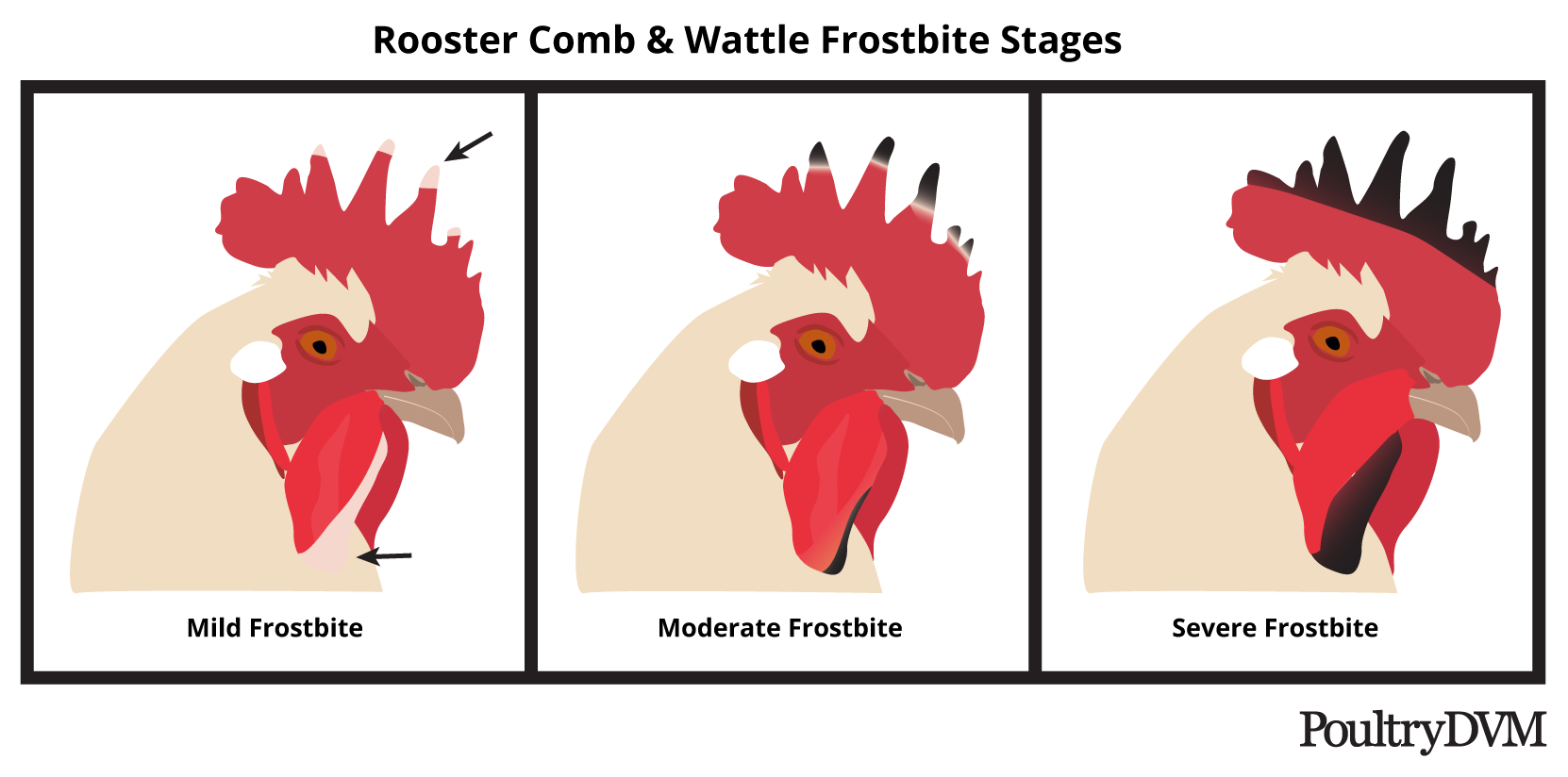
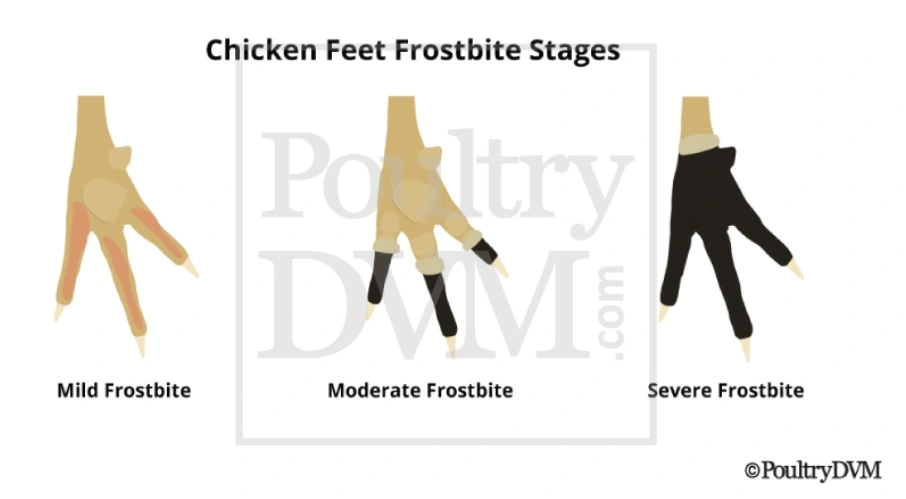
Early signs
- Pale, whitish or greyish tips of the comb or wattles (sometimes called “frostnip”).
- Slight swelling or redness of toes or feet, the bird may sit or hop rather than stand normally.
- Comb tips feel cold to the touch, or I notice frost forming on wattles.
Advanced signs
- Blistering, hardening of skin, brittle or dry tissue.
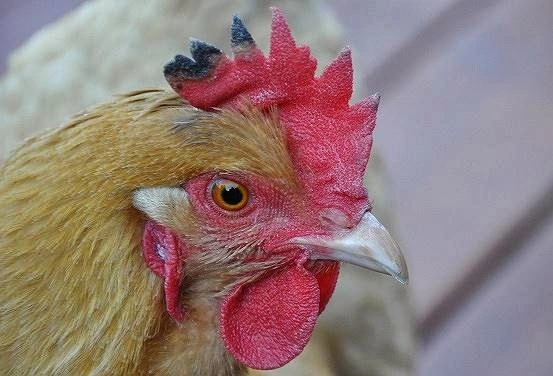
- Finally, blackened or necrotic tissue (dead tissue) on comb tips, wattles or toes. The black tissue may even fall off in severe cases.
- Bird may stop laying, may be reluctant to perch or walk, or may be pecked at by others if the damage looks abnormal.
Early signs are often still reversible by taking appropriate action. When you see advanced signs, the tissue damage is done and cannot be reversed. Of course, you still need to take action to prevent it from getting even worse. Also, check for general signs of cold stress.
What To Do If Frostbite Occurs?
Despite best efforts, frostbite can still happen. I keep a “winter emergency kit” on hand that includes a thermometer, a warm (not hot) water source, veterinary poultry care spray, and isolation space. Before discussing step-by-step first aid, let me first explain what not to do!
What not to do
- Do not rub or massage an area with frostbite, it hurts my hen and can cause further damage.
- Do not apply direct heat, like a hair-dryer or heat lamp directly on the frostbitten area. If frostbitten tissue is heated up too fast, it causes pain and damage.
- Do not cut away the dead tissue, unless it is infected. The tissue underneath is vulnerable and might get infected. For the same reason, do not break blisters.
Step-by-step first aid
If I detect early frostnip or frostbite, I take steps immediately:
- Isolate the bird to a warm, dry area away from drafts and pecking from others.
- Slowly re-warm frostbitten areas:
- For feet and toes: soak in warm (not hot) water for 15–20 minutes.
- For combs and wattles: gently use a warm, damp cloth. Apply very little pressure, do not massage the area.
- Monitor for infection. Swelling, discharge, and bad odour are signs. In serious cases, tissue may die, fall off and permanently alter the comb or wattle.
- Apply a wound spray or oils such as Vetricyn to protect the frostbitten area, or St John’s Wort Oil as a natural remedy against burns. Burns do not just come from heat, frostbite is essentially a cold burn.
- Keep your hens warm and well fed. Make sure the bird stays warm, eats, and drinks for several days. Add a thick layer of soft bedding to stimulate your hen to lay down and rest.
- Call the veterinarian if the frostbite is severe or infected, or if your hens is unable to walk normally after a few days. Treatment may include aspirin in the water for the pain, antibiotics for an infection, and wound sprays or oils.
From my experience, if early signs are caught and corrected, your hens can full recover within two to six weeks. Severe frostbite often leads to permanent damage.
How To Prevent Frostbite in Chickens in Cold Weather?
There are a few key things you need to pay attention to. It includes many practices used on large commercial farms to prevent frostbite, but translated to smaller scale hobby chicken keeping.
Proper ventilation with dry air
One of the top causes of frostbite is a poorly ventilated coop where moisture accumulates. My coop has minimal airflow at the top. So, no draft from below, nor completely closing all windows. First thing in the morning I check if there’s condensation on windows or cold walls. If there is condensation, I need to increase ventilation a little by opening the window at the top slightly more. Blocking the wind can also help, to prevent draft and lower the speed of air coming in (lower windchill effect).
So, in a backyard coop proper ventilation means:
- High vents near the roof rather than low drafts near roosts.
- Minimal airflow, at a low air speed.
- Blocking wind at floor level with tarps or boards, but not closing off upper openings.
Clean the coop regularly and cive a thick layer of dry bedding
Cleaning your chicken coops means removing wet droppings, scraping droppings off other surfaces, and adding fresh and dry bedding material. It is better to only dry cleaning, rather than wet cleaning for a example with a high pressure washer. In cold weather your coop will not dry properly, therefore I prefer dry cleaning.
For bedding I use a deep 6 to 12 inch layer of dry fresh bedding, such as wood shavings. A deep layer provides insulation from the cold floor to help keep your birds feet warm. Do daily checks of bedding dryness and remove wet litter right away.
Minimize moisture sources
Moisture is a silent frostbite enabler. Droppings are not the only source of moisture. I also make sure waterers do not leak, I clean up spills promptly, and if waterers are inside the coop I check for dripping of nipples. One practical tip is to limit open water surface area, for example by using nipple drinkers, since it lowers evaporation moisture. Outside the coop I clear snow and pools of water in runs. Sometimes, I add some straw.
Optimal roost or perch design
Flat perches are warmer for chickens in winter than round perches, because they can cover their feet fully with their bodies and fluffed feathers. I use wide, flat wooden roosts of 3 to 4 inches wide (about 8 to 10 centimeters). The worst choice would be round, cold, metal perches.
Apply petroleum jelly on combs and wattles
In my own routine I apply a very thin layer of petroleum jelly to combs and wattles during winter. This helps somewhat to reduce moisture on those surfaces. There is some debate about if it works, but I consider it is a low-cost extra measure in winter.
Use a chicken coop heater in extreme cold
Young chicks always need brooder heat lamps, since they can’t regulate their body temperature yet. However, mature hens have their mature feathers, and can regulate their temperature quite well. Therefore, normally supplemental heat for chickens is not needed. They can even handle it when the temperature drops slightly below zero.
Only in case of extreme cold weather, say two or more nights well below freezing, I sometimes add safe supplemental heat:
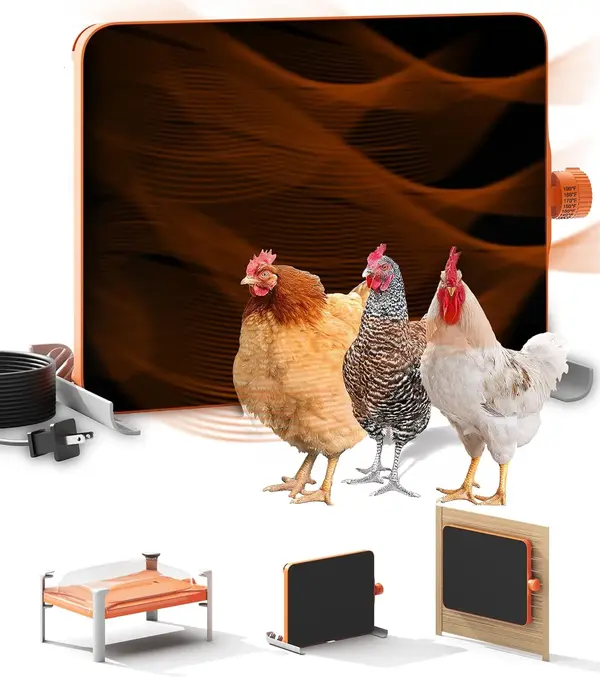
- I use a smart chicken coop heater, a radiant panel, which is the most safe option. It is temperature-controlled and keeps your hens warm but not hot.
- A traditional heat lamp becomes much hotter. So, it has a larger risk of fire, and your chickens burning their skin.
- Never use a brooder heat lamp for mature hens, since the coop will become way too hot.
Also, make sure the heater cords are secure, the heater is set-up or mounted safely, and has a thermostat that only kicks in when needed. Take care to raise the temperature in the coop a little but not too much. If your chickens rely too much on heater and then go outside into extreme cold, that contrast may stress them.
My Winter Checklist To Prevent Frostbite
I have developed a checklist that I follow before and during cold seasons. Here is my routine, I check each morning:
- Are the vents open at the top? Is there condensation on walls or windows?
- After brushing my hand over them, do wattles and combs feel cold or slick? Do they show any pale tip or abnormal color?
- Are any birds reluctant to roost or sit with feet tucked? Do any feet or shanks show discoloration?
- I look at roosts. Are they wide enough for chickens to cover their whole feet with their body and fluffed feathers? Are the perches cold (metal)?
- I inspect the coop bedding. Is it dry and full depth? Should I remove any droppings accumulation or wet spots?
- Are the waterers leaking or spilling?
- Is the run floor dry? Should I remove snow or frozen puddles?
- When the temperature drops below zero, I apply petroleum jelly to combs and wattles, and consider plugging in the heater and securing heater cords.
Final thoughts
Frostbite does not need to be a serious threat to a well-managed backyard flock. If you spot signs of frostbite early, act promptly, isolate the bird, re-warm slowly and monitor for infection. Better yet, prevent frostbite all together. If you already have your coop winterized, then you’re halfway there.
Focus on ventilation, clean the coop regularly, provide a thick layer of bedding, minimize moisture, roost comfort, apply petroleum jelly on combs and wattles, and supply extra heat if needed using a smart chicken coop heater.
If you do these things, your chickens will stay comfortable and healthy all winter, even when the temperature drops. They’ll scratch happily, lay with confidence and avoid the silent damage of frostbite. And you’ll enjoy your flock without the worry of comb tips or toes slowly turning black.
I have full confidence in you! And remember, it’s always good to have a veterinarian on speed-dial in case anything unexpected comes up.