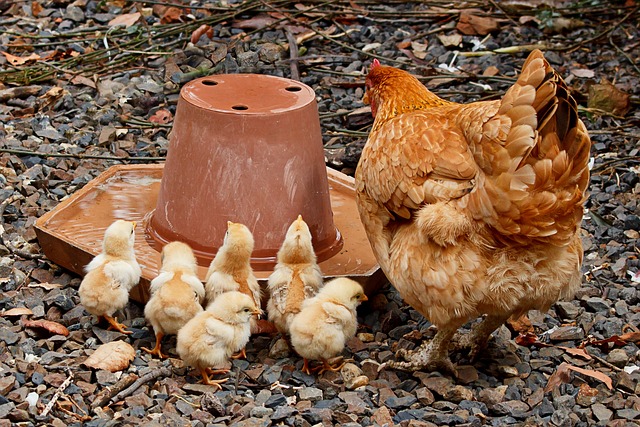
When was the last time you took a sip of cool water on a hot day? Just like us, your chickens need fresh water to stay healthy. From digestion to egg production, water is their most important nutrient. But, many backyard keepers overlook this crucial aspect of chicken care because they only focus on chicken feed. Let’s explore how to make sure your chicken water is always accessible, clean, and fresh – no matter the season.
Why Chicken Water Quality and Unlimited Access Are Crucial
Don’t just focus on feed when you want to improve the health and performance of your flock. Do you know the saying: “We can live 3 weeks without food, 3 days without water and 3 minutes without air”? Water plays a more important role than feed in your chickens’ health. It is so critical that even a few hours without it can harm your flock, especially during hot weather.
Poor chicken water quality or access can result in:
- Dehydration (and overheating in hot weather)
- Bad digestion and disease caused by bacteria like E. coli or Salmonella.
- Lower egg production or irregularly shaped eggs.
- Low activity and even death
Give your chickens access to fresh and clean water 24/7! This is the most important golden rule of good chicken keeping.
Fun fact: I love to challenge chicken keepers by taking water from their chicken waterers, offering it to them, and asking: “Will you drink it yourself”? For a few daredevils, I added the question: “Will you let your children drink it”? Only good chicken keepers will say YES!
Click here to read more on how to keep your chicken water clean.
Monitor Chicken Water Consumption and Spot Changes
Professional poultry farms have fancy equipment to measure and monitor water intake. They know a sudden change might be the first sign of discomfort or disease. As a backyard chicken keeper, monitoring chicken water consumption is equally important. Spotting changes early might help you prevent serious problems.
What Is A Normal Chicken Water Intake And What Causes Changes?
It helps to know what is an average water intake, and what causes a low or high water intake:
- Average water intake of a laying hen is between 0,07 and 0,14 gallons (0,25 and 0,5 liters) per day. The exact amount depends on the size of the hen, feed intake, and egg production.
- Lower water intake can be caused by a lower water supply or quality. Always check if your hens have access to enough fresh and clean water. Check for technical malfunctions and if drinkers are at the correct height. Power outages are a problem if you have automatic drinkers needing electricity! In winter, prevent water from freezing by using heated chicken waterers.
- Higher water intake can be caused by hot weather, disease, vaccinations, or bad water quality. In hot weather, your hens can even drink double the normal amount! Especially if the water is cool and fresh. Also, digestive diseases that cause diarrhea might cause your hens to drink more. High potassium levels in the water or feed can also cause your birds to drink more.
Also, check your chicken’s behavior and use your common sense. After filling an empty drinker, do they run towards it like crazy? Probably they have been thirsty for a while… Or do your chickens seem less interested in drinking from a smelly drinker? You probably need to clean it more often.
Fresh, clean water is the cornerstone of a healthy flock!
How To Measure My Chicken Water Consumption?
As a backyard chicken keeper, there is a simple way to check water consumption. Draw a line inside the drinker with a permanent marker. Fill the drinker up to the line every day. After a day, measure and record the difference between the line and the water level. Fill the drinker again and repeat.
Keep in mind that the number of hens influences the amount. If needed, you can divide the measurement by the number of hens.
After a while, you will know what is normal for your flock in a healthy and optimal situation.
Tip: Monitor your chicken water consumption and waterers daily.
What Is Good Water Quality and How To Analyze It?
There are 3 main tests to check water quality, from simple to advanced techniques: use your senses, do the ‘window test’, and do laboratory analysis.
Use Your Senses
Good water quality means the water is:
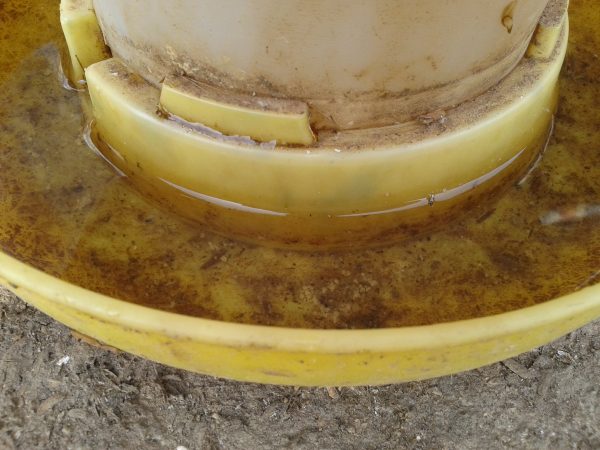
- Clear: Check visually if the water is clear and has no color or sediment like dirt or feces.
- Has no smell: Clean and fresh water has no smell. A bad smell can indicate ammonia, sulfur sources, bacteria, or algae.
- Taste-less: Water should have no taste. If it has a specific taste, that might indicate iron, sulfur, salts, or organic matter. The only exception is a light (not heavy!) chlorine taste and smell, which is ok. Chlorine is often used as a harmless poultry water disinfectant.
Do The ‘Window-Test’
The window test is a simple test I use myself at home:
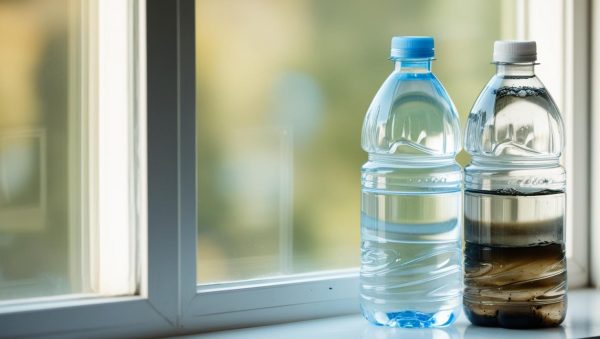
- Find a clean, preferably brand new, water bottle and empty it in the sink.
- Use the clean bottle to take a water sample from your drinker.
- Leave the closed bottle inside, at room temperature, in front of a sunny window for one week
- Check the water with your senses. Is it clear, odor-free, and without taste? Then it is most probably clean and fresh water.
It might be worthwhile to do this test with two separate water samples, from the drinker as well as the water source. Check for differences. In case of bad water quality, your drinker-cleaning skills might not be the problem. Tap water, rainwater, and groundwater often have a different quality. Also, equipment like a rainwater bin or your kitchen tap might need cleaning or descaling.
Do Laboratory Analysis
Many contaminants can cause lower water quality. Although they give a good indication, the simple tests mentioned before might not be sufficient. Therefore, professional poultry farms analyze water samples from drinkers regularly.
As a poultry specialist, I regularly sent water samples to the laboratory for analysis of more than 15 factors! The main categories of analysis are:
- Chemical analysis: like pH, hardness, sulphates, chlorine, sodium, potassium, magnesium, nitrates, iron, fluoride, pesticides, and more.
- Microbial analysis: like for E. Coli, Salmonella, Streptococcus, and more.
Click here for more information on water quality criteria in poultry, including a table with analysis norms.
Seasonal Tips to Improve Chicken Water Quality and Access
Maintaining water quality and accessibility can be challenging as seasons change. Here are some practical, season-specific tips to keep your flock hydrated all year round.
Summer Tips
- Offer shade and position waterers in shady areas to keep the water cool and fresh.
- Add frozen water bottles or ice cubes to keep your chicken water cool.
- Add electrolytes to the water to boost hydration in extreme temperatures.
Winter Solutions
- Use heated chicken waterers or a water heater base to prevent the water from freezing as the nights grow colder.
- Insulate water lines and outdoor waterers or bring waterers indoors overnight if temperatures drop.
- Check the water frequently. Even with heated waterers, check at least twice daily to ensure the water is accessible.
Year-round Tips:
- Clean and disinfect waterers regularly to prevent dirt, algae, and microorganisms.
- Monitor water quality closely. Check for algae, dirt, or unusual odors every day. To make sure the water is clean, do the window-test or even laboratory analysis.
- Elevate or hang waterers to prevent mud and dirt from contaminating the water. Elevating can be done with bricks for example.
- Provide multiple water stations in dry, accessible spots.
- Check for leaks in waterers and repair or replace them in time.
- Opt for nipple waterers to reduce contamination compared to open waterers.
FAQs About Chicken Water
The most commonly asked questions about chicken water quality and access are:
Can chickens drink tap water?
Yes, most tap water is safe. If you want to make sure, test it for high chlorine levels or contaminants
Can I use rainwater or well water for my chickens?
Yes. Rainwater and well water are sustainable options for your flock. Set up a rain barrel with a filter to collect and clean rainwater. Like rainwater, well water also needs to be filtered before giving it to your chickens. Have it tested in a laboratory before using it. Read more about filtering your chicken water here.
What temperature should chicken water be?
Ideally, chicken water should be cool but not freezing. Chickens are less likely to drink very cold water in winter.
Do you recommend adding apple cider vinegar to my chicken water?
Yes, but it is not a necessity. Apple cider vinegar can boost overall chicken health and keeps the water clean. However, there are also other options. I do NOT recommend it if you have metal waterers, since it will cause corrosion.
What is the best water filter to use for your chicken water?
Choosing the best water filtration system depends on your water source, quality, installation, and equipment. For most backyard flocks, a combination of mechanical and UV filters is very effective. Mechanical filters remove dirt and algae while UV filters disinfect the water. Adding an activated carbon filter can further improve water quality if needed. It removes chlorine, sediment, odors, tastes, and other residues.
Final Thoughts
Keeping your chicken water clean doesn’t have to be complicated. It just takes a little daily effort and the right tools. You’ll have a healthier, happier flock that rewards you with delicious fresh eggs and cheerful clucks. Remember, clean chicken water is one of the easiest ways to show your chickens you care. Your chickens (and their eggs) will thank you!