
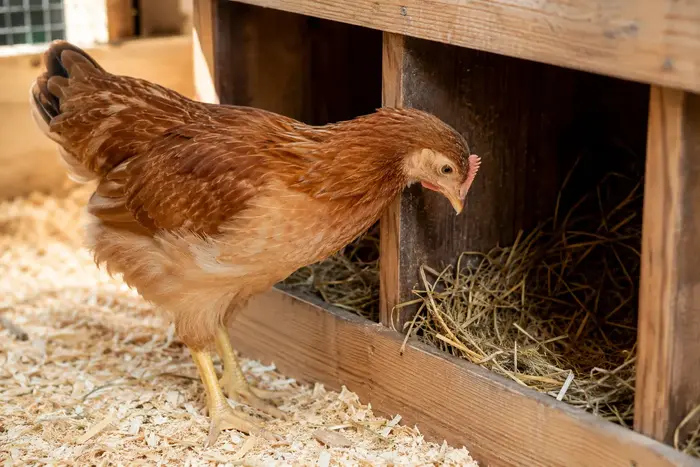
If your chickens aren’t laying eggs, one of 12 common reasons is almost certainly the cause — and most of them are completely fixable once you know where to look.
I’ve had my share of mornings checking the nesting boxes and coming away empty-handed. The first time it happened to me, three years into keeping chickens, my hens went from a steady six eggs a day down to two — seemingly overnight. I panicked. I called a vet friend. Why are my chickens not laying eggs? It turned out they were simply molting, stressed by the family dog who’d been spending more time near the run, and getting fewer daylight hours as autumn arrived. Three problems, all hitting at once, all fixable.
Later, I asked myself: “I am a poultry specialist and know what to do, why did I panic anyway?’ Well, I am only human. Despite having solved this issue countless times on large-scale chicken farms, it feels completely different when it happens to your own hens. Nowadays, I’ve learned to work through a checklist rather than guess — and this is that checklist.
Quick answer: why are my chickens not laying eggs? The most common reasons hens stop laying are molting, reduced daylight, stress, poor nutrition, broodiness, hidden nests, age, extreme heat, or a health issue. Most causes are temporary. Work through the 12 reasons below to pinpoint the problem — and find the right fix for your flock.
The 12 most common reasons chickens stop laying
Here’s the full list before we go into detail:
- Molting (feather regrowth diverts energy from eggs)
- Shorter days (not enough daylight hours)
- Stress (predator pressure, flock changes, routine disruption)
- Diet problems (low protein or calcium)
- Broodiness (she wants to hatch eggs, not lay more)
- Hidden nests (she’s laying — just not where you can find them)
- Age (too young, or past peak production)
- Extreme heat (heat stress shuts down laying)
- Too little light (dark coops blocking the daylight signal)
- A health issue (parasites, egg-binding, respiratory infection)
- Recently rehomed or new to the flock
- A natural seasonal break
Let’s go through each one.
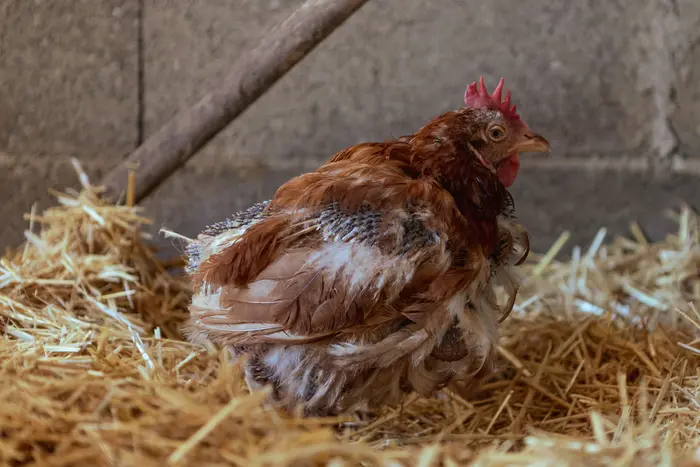
1. She’s molting
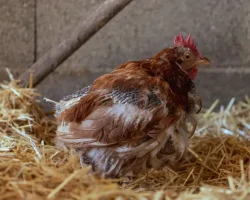
Molting is the single most common reason healthy hens suddenly stop laying. Once a year — usually in late summer or autumn — hens shed their old feathers and grow a new set. The process takes six to twelve weeks, and during that time most hens stop laying entirely. All their protein goes toward feather production instead.
How to spot it: Loose feathers everywhere, patchy or bare patches of skin (especially around the neck and back), and visible new ‘quill’ growth coming in. Some hens look alarmingly ragged; others drop feathers so gradually you barely notice.
What to do: Bump their feed protein up to 20–22% (a ‘feather fixer’ or flock raiser feed works well) and keep handling to a minimum — new pin feathers are sensitive. Eggs will return on their own within a few weeks of the new plumage coming in. Don’t add supplemental light during a molt — let the natural rest cycle complete.
2. The days are getting shorter
Hens need roughly 14–16 hours of light per day to trigger the hormonal cascade that produces eggs. As daylight shortens from late summer into autumn and winter, laying typically slows or stops — even in healthy, well-fed birds. As Penn State Extension notes, day length is the primary environmental driver of egg production in laying hens.
How to spot it: Production drops gradually, tracking the calendar — longest days = peak laying, shortest days = lowest production or full stop. No other symptoms.
What to do: Add a timed coop light to bring total daily ‘light’ up to 14–16 hours. A simple LED bulb on a timer, set to come on an hour or two before sunrise, is enough.
See the ultimate chicken lighting guide for egg production for bulb type, lux levels, and whether supplemental lighting is right for your setup.
3. She’s stressed
Stress is an underrated laying disruptor. Hens are creatures of habit — sudden changes in their environment, flock, or routine can shut down egg production for days or even weeks.
Common stress triggers:
- A predator prowling nearby (even without a successful attack)
- New hens added to the flock
- Moving to a new coop or yard
- Extreme noise (construction, fireworks, dogs barking near the run)
- Overcrowding
- Sudden changes to feed or routine
- A dog barking, growling and chasing your hens
How to spot it: Laying drops suddenly after a specific event. Hens may also huddle, reduce foraging, or show vigilance signs (scanning the sky, reluctance to leave the coop).
What to do: Identify and remove the stressor where possible. Give the flock a few days of calm, consistent routine. Hiding spots, perches, and enrichment (a peck block, some scattered scratch) help reduce flock anxiety. If it’s your dog, training can keep the peace between your dog and chickens. Production usually resumes within one to two weeks once the stressor is resolved.
4. Their diet is off
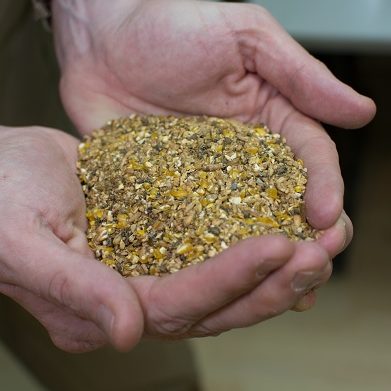
Egg production is nutritionally expensive. Each egg requires significant protein (for the albumen), calcium (for the shell), and a range of vitamins. If your hens aren’t getting what they need, the body prioritizes its own health over egg production.
How to spot it: Thin or soft-shelled eggs often come before laying stops altogether. A hen eating low-quality feed, mainly table scraps, or mostly scratch grains may also look dull and lose a little condition.
What to do:
- Switch to a quality layer feed with ~16% protein as the main ration. Layer rations are the foundation of the backyard flock diet.
- Offer crushed oyster shell free-choice so each hen can top up calcium as her own laying demands require.
- Limit scratch and treats to no more than 10% of total intake — high-carb, low-protein snacks dilute nutrition. For ideas on nutritious treat options, see the best treats for backyard chickens.
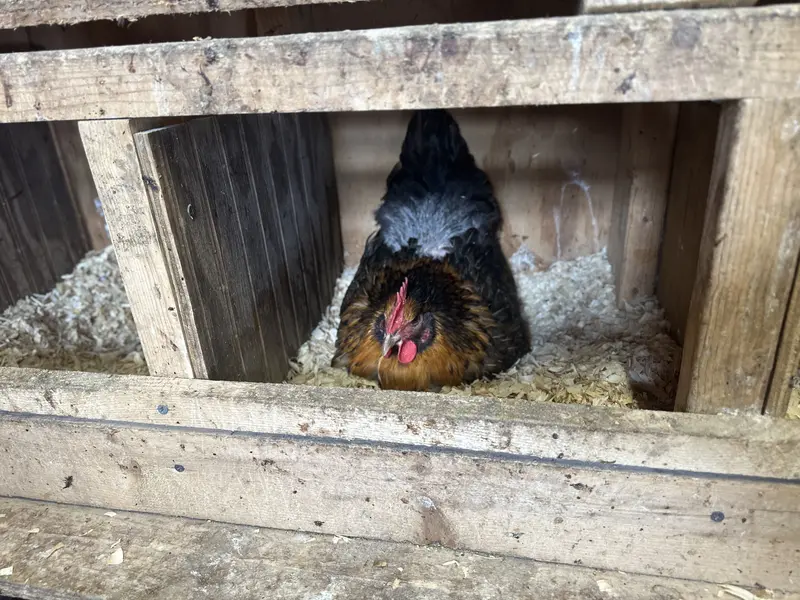
5. She’s gone broody
A broody hen has decided she wants to hatch eggs. She’ll sit in the nesting box for most of the day, puff up when you approach, cluck in a low warning tone, and stop laying entirely — her body is in ‘incubation mode’, not ‘laying mode’.
How to spot it: She’s in the box all day, feels hot and puffy when you lift her, and may growl or peck at your hand. She’ll often pluck feathers from her breast to line the nest.
What to do: If you don’t have a rooster and don’t want to hatch eggs, try to prevent broody chickens. Remove her from the box several times a day and block access if possible. Some keepers use a ‘broody breaker’ — a wire-bottomed cage with food and water that cools her underside and interrupts the hormonal loop. She’ll usually snap out of it within a few days.
6. She’s hiding her eggs
This one catches more keepers than you’d think. If your hens free-range — or even have access to a large run — they may have decided the nesting box isn’t their preferred laying spot. Eggs could be tucked under a shrub, behind a bale of straw, or in a corner of an outbuilding.
How to spot it: Egg numbers drop with no other signs. Hens go through normal pre-laying behavior (squatting, seeking privacy) but the box stays empty.
What to do: Conduct a thorough yard and coop search — check every corner, under every bush, behind every piece of equipment. Once you find the stash, block access to that spot and put a ceramic nest egg or golf ball in the proper nesting box to redirect her. Collect eggs frequently so the hidden nest doesn’t become a habit or attract predators.
7. She’s too young — or past her peak
If your pullets haven’t started laying yet, they may simply not be old enough. Most hens reach point of lay between 18 and 22 weeks, but heavy and heritage breeds can take up to 28–32 weeks. Check the when do chickens start laying eggs guide for a full breed-by-breed breakdown.
On the other end: laying naturally declines with age. Hens lay best in years one and two, then production falls by roughly 10–20% per year. By year four or five, a hen may only lay occasionally — perfectly healthy, just slower. This is normal and not a problem to fix.
8. The heat is too high
Extreme summer heat — above about 85°F (29°C) — stresses a hen’s body enough to reduce or stop laying. Heat stress diverts energy to thermoregulation, which competes directly with egg production.
How to spot it: Production drops during a heatwave. Birds drink more, pant, and hold wings away from the body. Production returns to normal once temperatures moderate.
What to do: Provide deep shade, keep waterers full of cool water (add ice on the hottest days), improve coop ventilation, and consider freezing a treat block. Early morning egg collection prevents eggs sitting in heat and reduces bacterial risk.
9. Not enough light — even in summer
In windowless or heavily shaded coops, even summer-kept hens can fail to get the right light signal. A coop lined with tarps or plywood that blocks natural daylight can trick hens into thinking the days are shorter than they are.
How to spot it: Low or inconsistent production despite good weather. The coop interior is dim even mid-morning.
What to do: Let in more natural light (a window, a translucent roof panel, or a coop door left open during the day), or add supplemental lighting as described in Reason 2.
10. A health issue is the culprit
If you’ve worked through reasons 1–9 and nothing fits, a health problem may be involved. The most common health-related causes of stopped laying include:
- Egg-binding — a hen cannot pass an egg. She’ll look uncomfortable, strain, and possibly show a palpable bulge near the vent. This is a veterinary emergency.
- External parasites (mites or lice) — a heavy infestation drains energy and blood, suppressing laying. Check under vent feathers for tiny crawling insects or reddish-brown mite clusters.
- Internal parasites (worms) — a high worm burden reduces nutrient absorption. Hens may look thin despite eating well.
- Respiratory infection — coughing, rattling, or nasal discharge alongside stopped laying suggests a bacterial or viral infection needing veterinary attention.
- Soft-shelled and thin-shelled eggs that precede a complete laying stop can signal a calcium deficiency or a reproductive tract issue.
When to call the vet: Lethargy, a swollen abdomen, obvious pain, straining with no egg produced, or significant weight loss alongside stopped laying. Don’t wait on these signs.
I am a poultry specialist, but I am not a veterinarian. This guide is educational. Always consult a poultry vet when you suspect illness in your flock.
11. She’s new to the flock or recently rehomed
Hens who have been moved — bought at a sale, rehomed, or recently integrated into a new flock — often take two to four weeks to resume laying as they settle in and establish their position in the new pecking order. This is completely normal.
What to do: Give her time, ensure she has access to food and water (watch for bullying that prevents feeding), and resist the urge to intervene too quickly.
12. She’s taking a natural seasonal break
Laying is cyclic. Even without a full molt, many hens take a natural rest after an intense laying period — particularly in late autumn after a long summer. If she’s healthy, eating well, not visibly molting, not broody, and getting adequate light, but production is still low, she may simply be resting. This is especially common in heritage breeds, which were not bred for year-round production.
What to do: Give it two to four weeks. If production hasn’t resumed and none of the other reasons apply, revisit the list and consider a vet check.
How to track what’s changed
The fastest way to narrow down the cause is to know your baseline. If you track daily egg counts per hen, you’ll spot a dip immediately — and connect it to a change in weather, feed, flock dynamics, or routine.
The free Chicken Log has a dedicated egg tracker section built for exactly this. Download it, fill in a week’s baseline, and you’ll be able to pinpoint the ‘before’ and ‘after’ the next time something changes.
Frequently asked questions
Why did my chicken suddenly stop laying eggs?
A sudden drop almost always points to stress, molting, or a change in daylight. Think back to what changed in the days before the drop — a new animal, a predator scare, a weather shift, a change in feed. That event is usually the culprit.
How long does it take for chickens to start laying again?
It depends on the cause. Stress-related pauses: one to two weeks. Molting: six to twelve weeks. Seasonal pause without supplemental light: until days lengthen again in spring. Broodiness: a few days once broken. Most causes resolve within two to four weeks.
Do chickens stop laying in winter?
Yes — most hens slow or stop in winter due to short days and the energy cost of staying warm. Providing supplemental light to reach 14–16 total hours per day keeps most hens laying through winter. Without it, a natural break is normal and not harmful.
What should I feed chickens to get them laying again?
Make sure layer feed (around 16% protein) is the main ration and that crushed oyster shell is available free-choice for calcium. Cut back on scratch and treats, which are low in protein and calcium. A protein supplement or ‘feather fixer’ feed can help if they’re also molting.
Can stress really stop egg production?
Absolutely. The stress hormone corticosterone directly suppresses the reproductive system in hens. A predator in the yard, a dog barking near the coop, a move to a new location, or the introduction of new flock members can all trigger a laying pause — sometimes for two to three weeks.
My hen sits in the nesting box all day but isn’t laying — what’s wrong?
She’s almost certainly broody. A broody hen sits tight, feels hot to the touch, and may peck when disturbed. Her body is in incubation mode, not laying mode. If you don’t want to hatch eggs, break the broody cycle early (see Reason 5 above) to get her back to laying within about a week.
One hen stopped laying but the rest are fine — should I worry?
Not necessarily. Individual hens molt, go broody, and take breaks on their own schedule. If she looks healthy, is eating and drinking normally, and has no physical symptoms, give her two to four weeks. If she loses weight, becomes lethargic, or develops any physical symptoms, consult a vet.
Is it true that a rooster helps hens lay more eggs?
No. Hens lay eggs based on their own hormonal cycle, daylight, diet, and health. A rooster’s only role in egg production is fertilizing eggs. His presence does not increase how many eggs a hen lays — and in some cases, an overly aggressive rooster increases flock stress, which can actually reduce laying.






2 thoughts on “Why Are My Chickens Not Laying Eggs? (12 Reasons + Fixes)”
I have a hen that stopped laying in February, due to her coopmate getting killed by a hawk, then she was molting. This is July, she was alone till early June when i got a new hen. The new hen started laying after 2 wks but still my other hen insn’t laying. She eats, drinks acts normally, shows no signs of illness or egg entrapment. I’m baffled.
Hi Karen, I’m sorry your hen has been through so many changes. Losing her coopmate, being alone, and then going through a molt can be very stressful for a hen and may explain why she hasn’t started laying again yet. Since she’s eating, drinking, and acting normally, I would continue to keep an eye on her. Some hens take quite a while to return to laying after major stress, and some may slow down as they get older. Hopefully she surprises you with an egg again soon! If not, please double check for all possible causes as mentioned in the article. If you suspect disease, I would take her to a veterinarian. Also, may I ask how old she is? Best regards, Cluckchick
PS: I would advise you to keep an extra hen. If something happens to one hen, the other one isn’t alone. Chickens are social animals and need the company of a (small) flock.