Chicken predators are one of the most common — and most heartbreaking — challenges in backyard poultry keeping. In my experience advising hobby keepers over more than a decade, predator losses are the number one reason people give up in their first year. They are also almost entirely preventable, once you know what you are dealing with.
I remember the morning I found my first losses — a trail of feathers leading to the fence, two birds gone, the rest of the flock silent and pressed into the corner of the run. Foxes, as it turned out. That day taught me that the first step in predator-proofing is identification: you cannot defend against an enemy you haven’t profiled. Here are the ten predators most likely to target your flock in the US, what signs they leave, and exactly how to stop them.
The 10 most common chicken predators at a glance: 1. Fox, 2. Raccoon, 3. Hawk, 4. Owl, 5. Coyote, 6. Weasel/Mink, 7. Snake, 8. Dog, 9. Cat,, 10. Rat, 11. Opossum
See the quick-reference table below, then each predator in detail.
Quick-reference: know your predator
Use this table to match the evidence you find to the likely culprit.
| Predator | Strikes when | Entry method | Telltale sign | Key defence |
| Fox | Day & night | Digs under, forces wire | One bird taken; buried nearby | Hardware cloth apron + secure latches, automatic coop door to close at dusk |
| Raccoon | Night | Unlatches doors, reaches through wire | Head removed; body left behind | Two-step complex latches with combination locks; 1/2″ mesh |
| Hawk | Daytime | Open sky, dive attack | Clean kill, feathers scattered | Overhead netting; dense cover |
| Owl | Dusk to dawn | Reaches through gaps ≥1″ | Breast eaten; carcass at site | Hardware cloth; auto door before dusk |
| Coyote | Dawn & dusk | Jumps or digs under fence | Whole bird taken; fence disturbed | 6ft fence + buried apron; guardian dog |
| Weasel/Mink | Night | Gaps as small as 1″ | Multiple kills; bites at neck | Seal every gap; 1/2″ hardware cloth |
| Snake | Any time | Gaps in floor or base | Eggs or chicks missing; snake found inside | Seal base gaps; collect eggs daily |
| Dog | Day | Breaks or jumps fence | Multiple kills; birds not eaten | Secure perimeter; LGD or trained dog |
| Cat | Day & night | Gaps and under doors, loose latches, jumps roofs or fences | Clean neck puncture, meaty parts eaten, chicks vanish | Hardware cloth; bury fencing; complex latches with lock; motion sensor sprinklers |
| Rat | Night | Gnaws through wood; squeezes gaps | Gnaw marks; eggs/chicks missing | Metal feed storage; snap traps outside; rat-proof chicken feeder |
| Opossum | Night | Unlatches simple doors | Slow kill; birds injured not taken | Complex latches; predator-proof door |
1. Fox – clever, relentless, and almost always at night
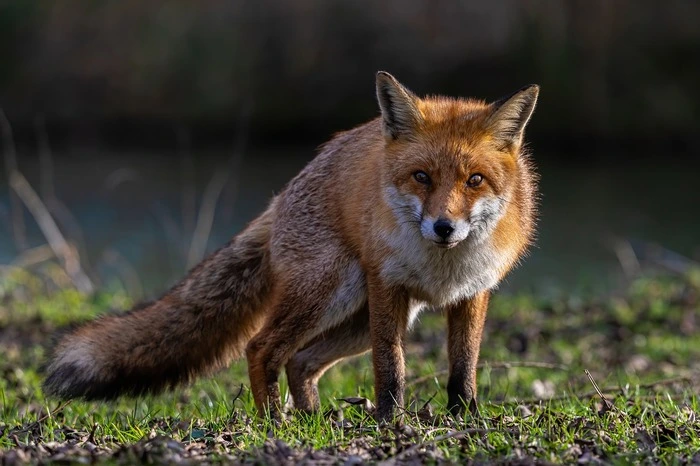
The fox is the predator I hear about most from backyard keepers across the US. Red foxes and grey foxes are found in nearly every state, from deep rural land to suburban gardens, and they are extraordinarily persistent once they locate a flock. Although primarily nocturnal, they will readily hunt during daylight, especially in spring and summer when they are feeding their young. Foxes are fast, clever, and determined. A single fox can rapidly kill various chickens during its hunt but they take just one bird with them. Foxes bury their kill after taking it and eating most of it. Read more about fox behavior at Wildlife Trusts.
How to identify a fox attack
- One or two birds missing — foxes typically take one kill and cache it.
- Feathers at the point of attack and leading toward the fence or tree line.
- Digging signs beneath the run fencing — foxes routinely dig under rather than through.
- A musky, distinctive odour around the coop in the immediate aftermath.
- Foxes’ tracks can be identified easily as their front and hind tracks overlap.
How to protect your flock
- Bury hardware cloth at least 12 inches down around the run perimeter, or lay a 12-inch horizontal apron on the ground secured with tent pegs — foxes dig straight down, not forward.
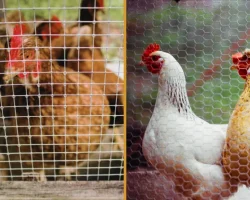
- Replace any chicken wire with 1/2-inch hardware cloth. Foxes can pull standard chicken wire apart with their teeth.
- Use carabiner clips or two-step latches on all coop doors. Foxes can work simple slide bolts.
- Lock birds in before dark, every single night. A fox that finds an open coop will return every night until there is nothing left. I love automatic doors because they open on schedule, so I can sleep in on weekends instead of getting up to unlock them. Tip: Read my Guide to the best automatic chicken doors.
- The last line of defense against foxes is having guardian animals, including dogs and geese, to scare them away. If you don’t have guardian animals, a solar predator repellent can help. It is a combination of motion-sensory lighting that will help to prevent visits from predators during the night hours.
2. Raccoon – Crafty Problem Solvers
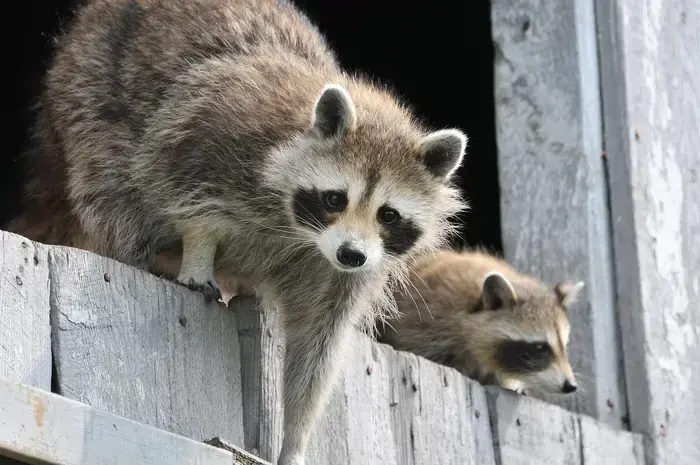
Raccoons are found throughout the continental US and are uniquely dangerous because of their hands. They are problem solvers and can open simple latches, pull standard wire apart, and reach through gaps to grab roosting birds — often killing without ever getting inside the coop. They are almost exclusively nocturnal and will return night after night to a productive site.
How to identify a raccoon attack
- Birds found dead inside a secured coop with their head removed — raccoons reach through gaps and pull off the head, leaving the body.
- Fence wire bent outward or pulled apart at attachment points.
- Distinctive handprint tracks (five long fingers with a palm pad) in soft ground near the coop.
How to protect your flock
- Fit all doors and latches with carabiner clips or combination locks. A raccoon can work a simple slide bolt in minutes.
- Cover all openings — windows, vents, pop-holes — with 1/2-inch hardware cloth fastened with screws and washers, not staples alone.
- Remove feed from the coop at night. Raccoons are initially drawn to food, then discover the birds.
- Consider electric fencing as a perimeter barrier for persistent individuals.
3. Hawk – the daytime aerial threat

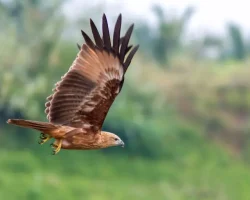
Red-tailed hawks, Cooper’s hawks, and sharp-shinned hawks are the most frequent aerial predators of backyard flocks across the US. They are federally protected under the Migratory Bird Treaty Act — you cannot legally harm them. Deterrence and exclusion are the only options. Hawks prefer to prey from heights aiming to capture chickens while they are exposed to daylight. They attack usually in spring as they are looking to stock up their food supply.
How to identify a hawk attack
- A bird found dead in the open yard, cleanly killed, with talon puncture marks on the back.
- Scattered feathers in a circular pattern — hawks often pluck before eating.
- Attack happens during daylight, usually midday to mid-afternoon.
How to protect your flock
- Cover the run completely with overhead netting or 1/2-inch hardware cloth.
- Provide dense shrubs, pallets, or low-roofed shelters so birds can hide the moment they see a threat overhead.
- Use a rooster as a sentinel — he will call an alarm at the first sight of a hawk overhead.
- As USDA Wildlife Services notes, combining several non-lethal deterrence measures is the most reliably effective approach to raptor management around poultry. Single-method approaches rarely hold up long-term against persistent raptors.
For a detailed breakdown of hawk and owl defence methods, see how to protect chickens from hawks and owls.
4. Owl – the silent night hunter
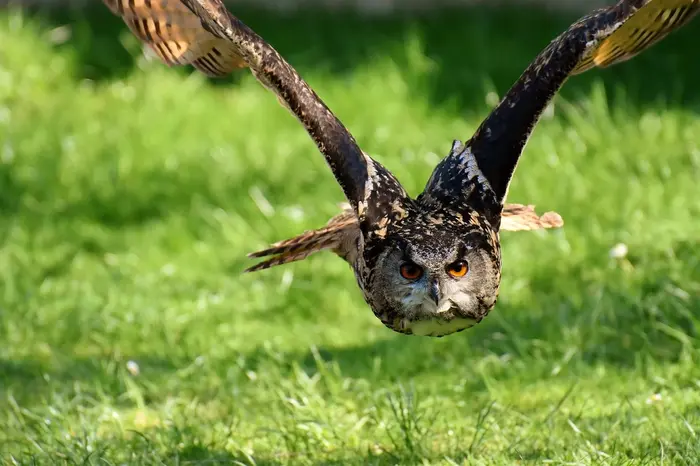
Great horned owls, barred owls, and barn owls are the primary owl threats. They hunt from dusk to dawn, are almost completely silent in flight, and can reach through gaps as small as one inch to pull birds off the roost. Because they strike at night, the first sign is often a dead or missing hen with no obvious sign of forced entry. Check out Audubon’s Bird Guide or the Cornell Lab of Ornithology’s Bird Guide to learn more about the different types of owls, hawks, and other raptors.
How to identify an owl attack
- Bird missing or found dead at the coop at dawn, with the breast eaten and little else disturbed.
- Feathers inside the run near a gap or vent — the owl reaches in and kills at the gap.
- No digging, no forced entry: owls exploit existing openings.
How to protect your flock
- Lock birds inside a fully enclosed coop every evening before dusk — 30 minutes before local sunset at the latest.
- Cover all vents, windows, and gaps with 1/2-inch hardware cloth. Owls can reach through anything larger.
- Use an automatic coop door on a light-sensor timer to eliminate the human error that causes most owl losses.
- Placing a solar-powered owl decoy with a moving head outside will work as deterrents against hunting predators.
5. Coyote – persistent, bold, and increasingly suburban
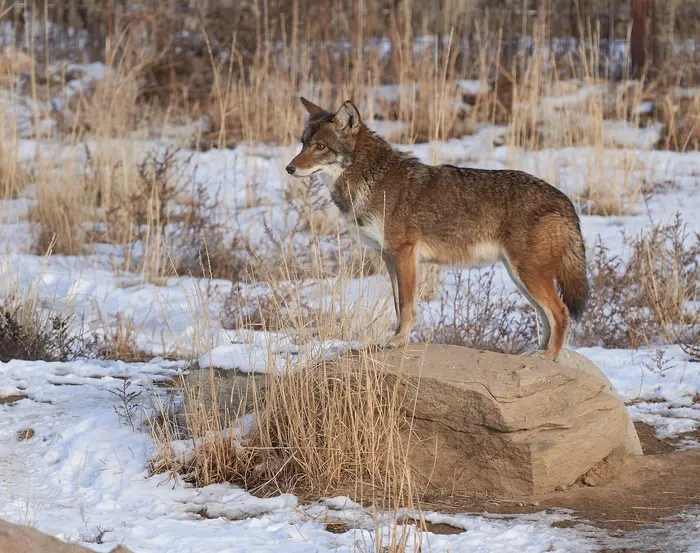
Coyotes have expanded their range dramatically and are now present in every US state including urban and suburban environments. They are smart, fast, and bold enough to attack in daylight — even in view of humans. A coyote that finds a flock will return until it is successfully kept out.
How to identify a coyote attack
- Multiple birds killed or missing; feathers and some remains scattered across a wide area.
- Fence sections pushed in, jumped over, or dug beneath — coyotes can jump a 5-foot fence from a standing start.
- Attacks at dawn and dusk, which are peak coyote activity windows.
- Their tracks can be identified by their perfect stepping as their front and back tracks overlap like foxes.
How to protect your flock
- Build fencing at least 6 feet tall with a coyote roller or outward-angled topper to prevent climbing.
- Bury a 12-inch hardware cloth apron flat on the ground around the run perimeter — coyotes dig deep.
- A livestock guardian dog is the single most effective coyote deterrent available; even the presence of a large dog will displace local coyotes.
- Solar-powered flashing predator-deterrent lights (red LED eyes) add an additional layer at night.
6. Weasel and mink – small killers with enormous reach

Weasels might look small, but they are very dangerous. They kill for sport, and a single weasel can easily wipe out your entire flock overnight. They can squeeze through gaps as small as one inch and are almost impossible to hear or detect during an attack.
How to identify a weasel or mink attack
- Multiple birds found dead, often killed by a single bite to the back of the skull or neck — weasels kill by instinct, not hunger.
- Very little blood or mess: weasel kills are typically clean.
- No visible entry point in obvious locations — look carefully at base gaps and ventilation openings.
- Their tracks are like small paw prints with pointy toes
How to protect your flock
- Seal every gap larger than 1/2 inch in the coop — use hardware cloth and caulk for small gaps, not foam (weasels chew through it).
- Replace any flimsy door or vent cover with solid wood or metal — weasels will work loose fittings until they yield.
- Use a solid floor in the coop, or hardware cloth buried beneath a deep bedding layer if a dirt floor is unavoidable.
- The coop should be kept well lit at night. You can use motion sensor lights as well.
7. Snake – the Silent Egg and Chick Thieves
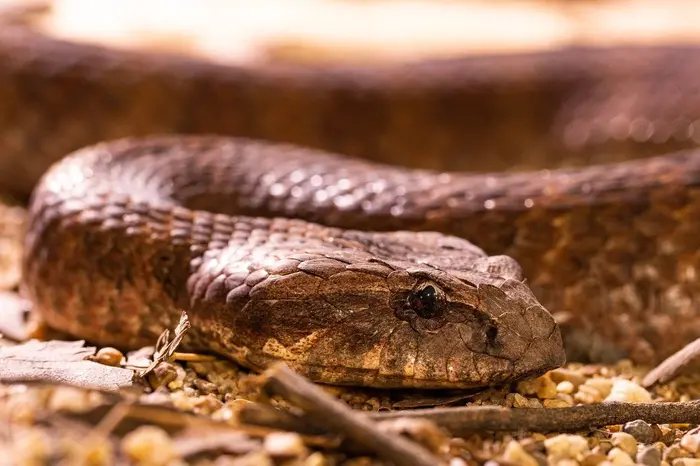
Snakes do not typically threaten adult hens but are a serious problem for eggs, chicks, and bantam breeds. Black rat snakes and corn snakes are the most common culprits across the southern and eastern US — they are attracted to the warmth and food supply of the coop and can swallow eggs whole. They can be seen resting in the nesting boxes after swallowing the eggs.
How to identify a snake in the coop
- Eggs disappearing with no external sign of a break-in.
- A snake found in or near the nesting boxes — often still digesting.
- Chicks or bantam birds missing with no other predator evidence.
- Slithering tracks in the mud or sand near the coop
How to protect your flock
- Collect eggs at least once daily, ideally twice in summer — a coop with eggs is a snake magnet.
- Seal gaps at the coop base and floor — snakes enter at ground level through surprisingly small openings.
- Keep the grass around the coop short and remove debris piles: snakes ambush from cover, and a tidy perimeter removes their launch positions.
- Keep young chicks in an enclosed brooder until they are large enough to be safe.
8. Dogs – the threat nobody expects
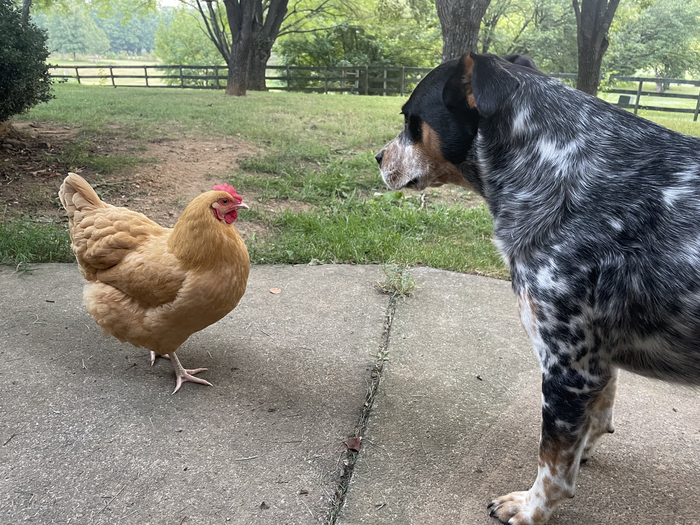
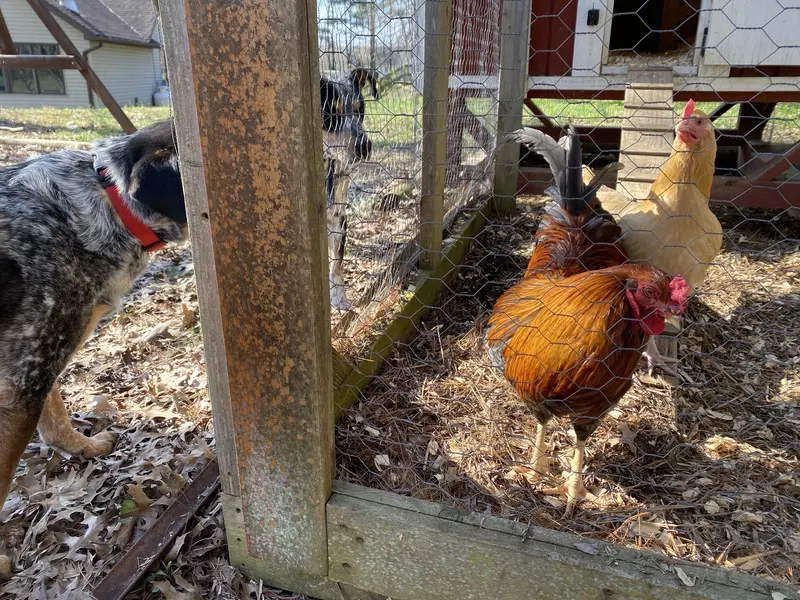
Dogs — including your own or a neighbor’s — are responsible for a significant proportion of daytime flock losses. Pet dogs rarely eat their kills; instead, they often chase, injure, and kill chickens because of prey drive or play behavior. Even a friendly dog with no history of aggression toward other animals can cause severe losses if it gets access to a flock. Stray dogs and feral dogs can be an even greater threat, as they may actively hunt chickens and wipe out an entire flock when given the opportunity.
How to identify a dog attack
- Multiple birds are injured or killed in a short window, often mid-morning to afternoon.
- Birds bitten but not eaten — wounds on the back, wings, and neck.
- Fence sections pushed in or evidence of a dog working under the gate.
- The hindfoot tracks and frontfoot tracks of dogs are offset from each other.
How to protect your flock
- Train your own dogs to respect chickens from puppyhood — start with leashed introductions and reward calm behaviour. See our guide to keeping the peace between chickens and dogs.
- Secure the run perimeter against neighbouring dogs: a solid fence with a return at the top is more effective than wire alone.
- Never leave an untrained dog unsupervised with free-ranging birds, however reliably calm it seems in other contexts.
9. Cats – Opportunistic Hunters
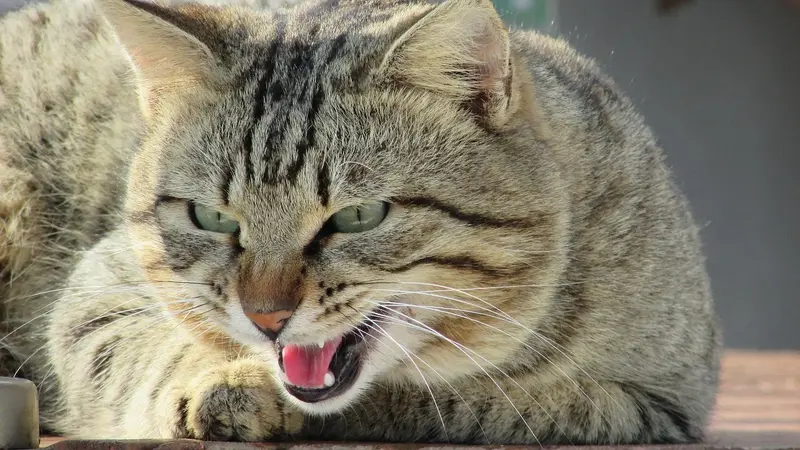
Cats are not scared of anything. Domestic cats usually leave full size hens alone but take chickens and bantams. Some angry cats can harm the hens as well. They usually eat their kill and they can carry their kill as well. BobCats are angry cats found in rural or less populated areas and they rarely leave their evidence after a kill.
How to identify a cat Attack
- Small puncture wounds and claw marks on the neck, head, or body, often with only minor feeding on meaty parts only.
- Scattered feathers and missing chicks, as cats frequently carry smaller prey away.
- Attacks on free-ranging chickens, especially during dawn, dusk, or daylight, with little or no damage to the coop.
- Small paw prints similar to foxes but without visible claw marks, and signs of stalking near bushes or other hiding places.
How to protect your flock:
- Install 1/2-inch galvanized hardware cloth to fully cover the run
- Bury wire fencing at least twelve inches into the ground around the perimeter to block cats from squeezing under gaps.
- Equip all coop doors and windows with heavy-duty, complex latches like carabiners or two-step padlocks that cannot be jiggled open.
- Trim back overhanging tree branches and nearby shrubs to eliminate elevated launching pads for climbing cats.
- Collect fresh eggs and clean up spilled feed daily to avoid attracting rodents that draw feral cats to the coop.
- Use motion sensor sprinklers and motion sensor flood lights to keep the cats away.
10. Rats – The persistant overnight Raider
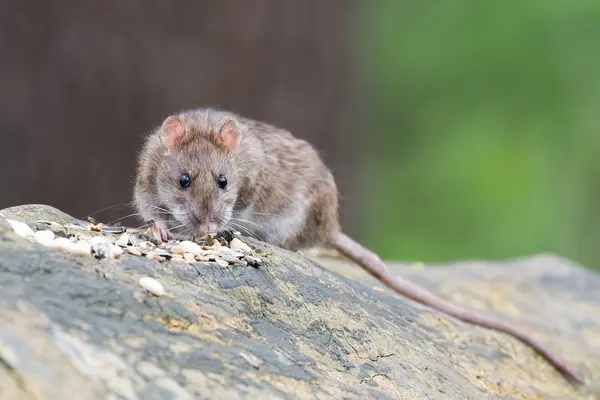
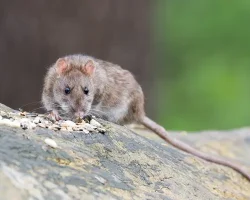
Rats rarely kill adult hens but they steal eggs, kill chicks, and gnaw through feed bags, wood, and even soft metal. More importantly, a rat infestation draws larger secondary predators — owls and weasels follow rat populations closely. Controlling rats is therefore part of overall predator management, not just a hygiene issue.
How to identify a rat problem
- Droppings along the base of walls and behind feeders — dark, cylindrical, about 1cm long.
- Gnaw marks on wood at ground level, particularly around door frames and floor joins.
- Eggs disappearing or found cracked on the coop floor; chicks missing overnight.
- Tracks are very small and have a tail trail
How to protect your flock
- Store all feed in metal containers with tight-fitting lids — plastic bins are no match for determined rats.
- Ideally, use a rat-proof chicken feeder like Grandpa’s Automatic Chicken Feeder. Read my guide on How to choose the best chicken feeder for more information.
- Remove uneaten food and spilled grain every evening: a coop with accessible food is a rat hotel.
- Seal gaps at the coop base with hardware cloth and concrete — rats can gnaw through wood and squeeze through gaps larger than 1/2 inch.
- Place snap traps, ideally covered rat traps, outside the coop. Position them so chickens cannot access them. Read Menace To Pests’ guide on the best outdoor rat traps or use the best electronic rat traps for a more humane and indoor solution you can use in the feed storage area.
11. Opossum — the overlooked night visitor
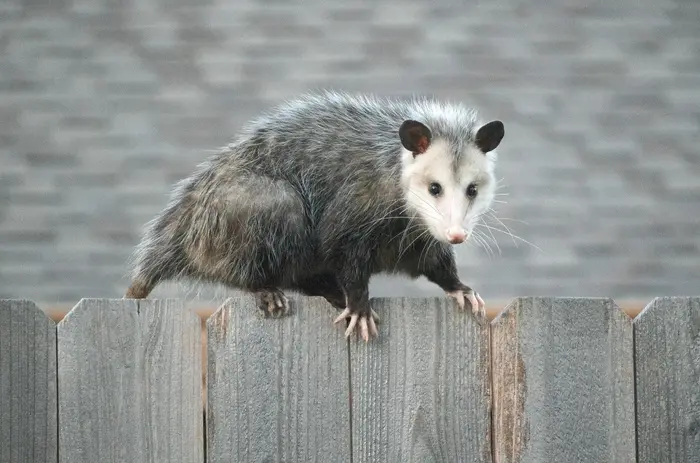
Opossums are slow, non-aggressive animals that rarely attack adult hens directly — but they will steal eggs, kill chicks, and injure adult birds when cornered. They are found across most of the continental US and are increasingly common in suburban areas. Because they are timid, many keepers underestimate them until they find an opossum inside the coop.
How to identify an opossum visit
- Eggs missing or partially eaten in the nesting box; small claw marks on the shells.
- A distinctive five-toed footprint with a widely splayed inner toe (the opposable “thumb”).
- Chicks injured but not killed — opossums are slow and often disturbed mid-attack.
How to protect your flock
- Fit carabiner clips or two-step latches on coop doors — opossums can work simple slide latches like raccoons.
- Collect eggs regularly, especially at dusk when opossums become active.
- Check the coop at dusk: opossums often enter just before dark and are easy to relocate if found.
The universal predator-proofing checklist
No single predator-proof measure works against all ten threats above. The most resilient flocks use layered defences. For full details on what every setup should have, see our predator protection guide. An additional good resource is the Penn State Free Webinar on Predator Control.
- 1/2-inch hardware cloth on all walls, floors, and overhead run coverage — not chicken wire.
- Carabiner clips or two-step latches with combination locks on every door and pop-hole.
- A buried or apron-style hardware cloth skirt around the run perimeter (12 inches minimum).
- An automatic coop door that closes at dusk, every evening, without human input.
- Feed stored in metal containers; no food left accessible after dark.
- A rat-proof feeder, like Grandpa’s Automatic Chicken Feeder
- A guardian animal — LGD, rooster, or guinea fowl — adds a living, adaptive layer no hardware can replicate.
- A solar predator repellent or owl decoy with a moving head if you don’t have guardian animals nearby
For practical guidance on sizing your coop and run to make predator-proofing easier and more cost-effective, see how to choose the right chicken coop size.
If you also want to keep an eye on your flock at all times, you might want to consider installing a coop camera or all-in-one smart chicken coop kit.
Frequently asked questions
What is the most common chicken predator in the US?
Foxes and raccoons are the most frequently reported across all regions. Hawks are the leading daytime aerial threat, while owls and foxes dominate overnight losses. The exact ranking varies by region — coyotes are more significant in the West and Midwest, mink in the Northeast near waterways.
How do I know what killed my chicken?
The evidence left behind is the key: head removed but body intact = raccoon. One bird taken and cached = fox. Clean daytime kill with talon marks = hawk. Multiple birds killed but not eaten, with a bite at the neck = weasel or mink. Use the quick-reference table at the top of this article to narrow it down.
Can a hawk or owl take a full-sized chicken?
Hawks can kill full-sized hens but struggle to carry birds weighing more than 1kg. Great horned owls are powerful enough to take full-sized birds. Both attack regardless of whether they can fly the bird away — they will kill on the spot and eat what they can. Smaller breeds and bantams are at higher risk of being carried off.
What is the best predator-proof fencing for chickens?
1/2-inch welded hardware cloth is the gold standard. It stops reaching raccoons, is too rigid for foxes to pull apart, and has gaps too small for weasels and mink. Bury or apron it at ground level for digging predators. Standard chicken wire is not predator-proof against foxes, raccoons, or weasels.
Do motion sensor lights stop predators?
They deter some predators temporarily — foxes and coyotes that are unhabituated to human activity will avoid lit areas. However, persistent individuals habituate quickly. Motion lights are a useful supplementary layer, not a primary defence. Hardware and locks are the foundation; lights and deterrents are additions.
Are opossums dangerous to chickens?
Opossums are generally a low threat to healthy adult hens. Their main impact is egg theft and occasional chick predation. They are timid and slow — most opossum incidents involve birds that are already sick, small, or in confined spaces where the opossum can corner them. Secure latches and regular egg collection resolve most opossum problems.