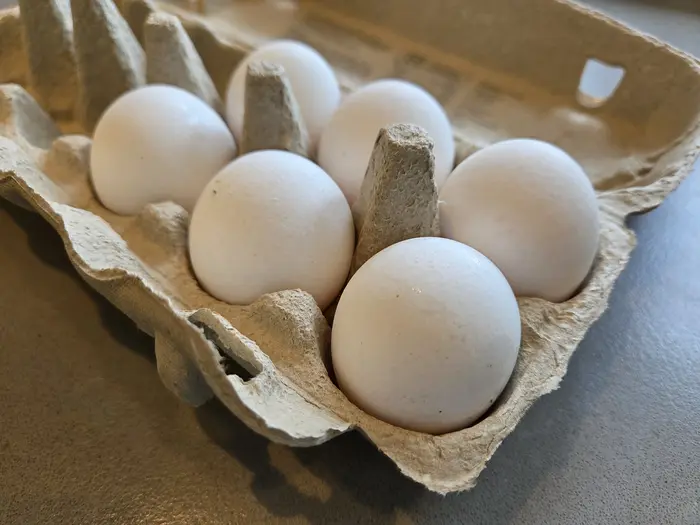
Storing fresh backyard eggs correctly comes down to one decision: whether or not you wash them. Unwashed eggs keep for weeks at room temperature; washed eggs must go straight in the fridge. Get that right and your eggs will stay fresh far longer than anything from the supermarket. Read our complete guide on how long fresh eggs last.
How to store fresh eggs — quick summary:
Preferably, do NOT wash your eggs until right before use. Unwashed eggs can be stored on the counter (below 68°F / 20°C) for 2–4 weeks, or refrigerated for up to 3 months. To store washed eggs, refrigerate them immediately and use within 1–2 months. Always store pointed-end down. For long-term storage, freeze, water-glass, or freeze-dry.
In peak summer my hens lay more eggs than my family could ever eat in a week — and that surplus is exactly when good storage matters most. Over the years I have tried every method going, from a simple bowl on the counter to water glassing dozens of eggs for winter. Here is exactly how to store fresh eggs at every timescale, and the mistakes that quietly ruin them.
What you will need
- Clean, dry eggs (unwashed if possible — see below)
- An egg carton, bowl, or rack
- A cool, stable spot away from heat and direct sun — or fridge space
- For long-term storage: freezer bags, or food-grade pickling lime and a large jar
First, understand the bloom
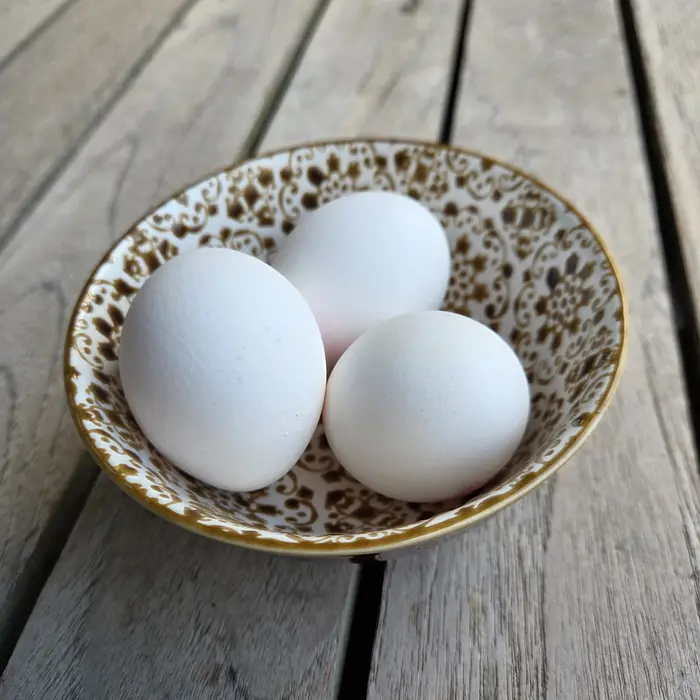
When a hen lays an egg she coats it in a natural, invisible layer called the bloom (or cuticle). This seals the shell’s thousands of tiny pores, keeping bacteria out and moisture in. An egg with its bloom intact does not need refrigeration and stays fresh for weeks. Wash it, and you strip that protection away — which is why commercially washed US supermarket eggs must be refrigerated from the moment they are cleaned. In the UK and most of Europe, commercial eggs are not washed, retain their bloom, and are sold at room temperature on the shelf.
The single most important storage rule for backyard keepers: do not wash eggs until you are ready to use them. A little dirt on the shell is far less of a problem than a stripped bloom. If an egg is heavily soiled, wipe it gently with a dry cloth or fine sandpaper rather than water.
How to store eggs on the counter (unwashed)
For eggs you will use within a few weeks, counter storage is simplest and keeps them at a consistent temperature ready for baking.
- Leave eggs unwashed. Only remove loose debris with a dry cloth.
- Place them in a bowl, rack, or carton on the counter, away from the stove, oven, and direct sunlight.
- Keep the room below 68°F (20°C) if you can. In a hot summer kitchen above 77°F (25°C), move them to the fridge instead.
- Use within 2–4 weeks. Rotate: mark cartons with the collection date and use oldest first.
✔ Expert Tip: A simple way to track age is to write the date on each egg in pencil as you collect it. Pencil is food-safe and does not soak through the shell.
How to store eggs in the refrigerator
Refrigeration roughly triples an egg’s shelf life. Unwashed eggs keep up to three months in the fridge; washed or store-bought eggs keep five to eight weeks.
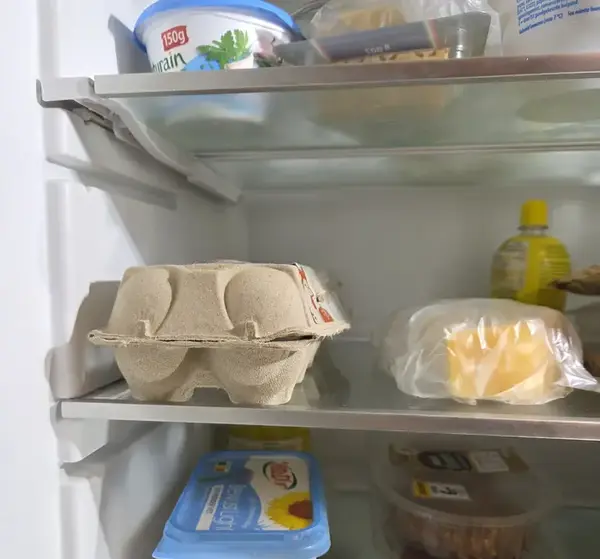
- Store eggs in a carton, not in the fridge door. The door’s temperature swings every time it opens; the main body of the fridge stays a stable 35–40°F (2–4°C).
- Store pointed-end down. This keeps the yolk centered and the air cell at the top, which preserves quality longer.
- Keep eggs away from strong-smelling foods. The porous shell can absorb odours from onions, garlic, and fish.
- Once refrigerated, keep refrigerated. Moving cold eggs in and out causes condensation that can drive bacteria through the shell.
A quick note on the ‘washed vs unwashed’ decision: it also affects taste and texture over time.
How to store eggs long-term (months)
When your flock is in full summer lay, and you want a reserve for the low-production winter months, three methods preserve eggs for far longer.
Freezing (up to 12 months)
- Crack eggs into a bowl, beat lightly, and pour into ice cube trays (roughly one egg per two cubes).
- Add a pinch of salt (for savoury use) or sugar (for baking) per egg to stop the yolk turning gelatinous.
- Freeze, then transfer cubes to a labelled bag. Never freeze eggs in the shell — they crack as the liquid expands.
Water glassing (up to 12–18 months)
Water glassing preserves unwashed eggs (bloom intact and essential) in a solution of food-grade pickling lime and water. Mix 1 ounce of pickling lime per quart of cool water, submerge clean unwashed eggs pointed-end down in a jar or crock, seal, and store somewhere cool and dark. Rinse and use as normal — do not use water-glassed eggs for hard-boiling, as they are prone to cracking.
Freeze-drying (indefinite)
If you own a freeze-dryer, eggs freeze-dry well as beaten liquid and store for years when sealed with an oxygen absorber. Rehydrate with an equal volume of water before use. This is a bigger investment but the longest-lasting option.
Troubleshooting: common storage mistakes
- Washing before storage. The most common mistake. It strips the bloom and shortens shelf life dramatically. Wash only at point of use.
- Storing in the fridge door. Temperature swings there age eggs faster. Use the main shelf.
- Pointed-end up. Lets the air cell rise into the egg and the yolk drift to the shell. Store pointed-end down.
- Re-chilling after warming. Condensation on a cold shell brought to room temperature invites bacteria. Only remove what you will use.
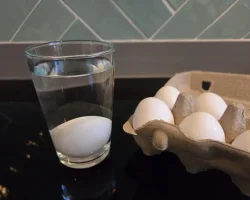
- Losing track of age. Without dating, you cannot rotate stock. When unsure, run a float test before using.
For science-based recommendations, read Penn State Extension’s guide to proper handling of eggs from hen to consumption.
Frequently asked questions
How long do fresh eggs last in storage?
Unwashed eggs last 2–4 weeks on the counter and up to 3 months refrigerated. Washed eggs last 1–2 weeks on the counter and 5–8 weeks refrigerated. Frozen or water-glassed eggs keep up to 12 months or more.
Should you store fresh eggs pointed-end up or down?
Pointed-end down. This keeps the air cell at the top and the yolk centered, which preserves freshness and quality for longer.
Do you have to refrigerate fresh backyard eggs?
Not if they are unwashed and the bloom is intact — they keep for weeks at cool room temperature. Once washed or once refrigerated, keep them cold from then on.
Can you store eggs you have already washed?
Yes, but refrigerate them straight away and use within 1–2 months. Washed eggs have lost their protective bloom, so room-temperature storage is no longer safe.
What is the best way to store a big summer egg surplus?
For a few weeks, refrigerate unwashed. For months, freeze beaten eggs in ice cube trays or water-glass unwashed eggs in pickling lime solution. Both let you build a reserve for winter when hens lay less.
Sources: Penn State Extension — Proper Handling of Eggs from Hen to Consumption.