
No — in most cases you should not wash fresh backyard eggs until you are ready to use them. Washing removes the egg’s natural protective coating, called the bloom, which shortens shelf life and can actually make eggs less safe.
Should you wash fresh eggs?
Generally no. An unwashed egg keeps its natural bloom, which seals the shell against bacteria and lets it store for weeks unrefrigerated. Wash eggs only right before you cook them. If an egg is heavily soiled, dry-clean it or wash it and refrigerate it immediately.
This is one of the questions I get asked most at the farm gate — new customers are often surprised when I tell them not to wash the eggs I have just handed over. It goes against a lifetime of supermarket habit. But once you understand the bloom, it makes complete sense. Here is the full answer.
Why you should not wash fresh eggs
When a hen lays an egg, she coats it in a thin, invisible layer called the bloom (or cuticle). This natural sealant covers the shell’s 7,000–17,000 microscopic pores, blocking bacteria from entering and slowing moisture loss from inside. It is the reason a freshly laid, unwashed egg can sit on the counter for weeks without spoiling.
Washing — especially in cool water — strips the bloom away and can even draw surface bacteria through the pores into the egg. Once the bloom is gone, the shell is porous and unprotected, which is exactly why washed eggs must be refrigerated and used sooner.
To get the most out of your backyard harvest, learn how to store fresh eggs properly and see exactly how long fresh eggs last both on the counter and in the fridge.
Why US and European eggs are handled differently
This is where a lot of confusion comes from. In the United States, commercial eggs are legally required to be washed and sanitized before sale — which removes the bloom, so they must then be refrigerated continuously. In the UK and most of Europe, commercial eggs are not washed, retain their bloom, and are sold at room temperature on the shelf.
Neither approach is wrong — they are just two different systems. As a backyard keeper, you get to choose. And for most keepers, the unwashed, bloom-intact approach gives longer storage and less fuss.
How to clean a dirty egg the right way
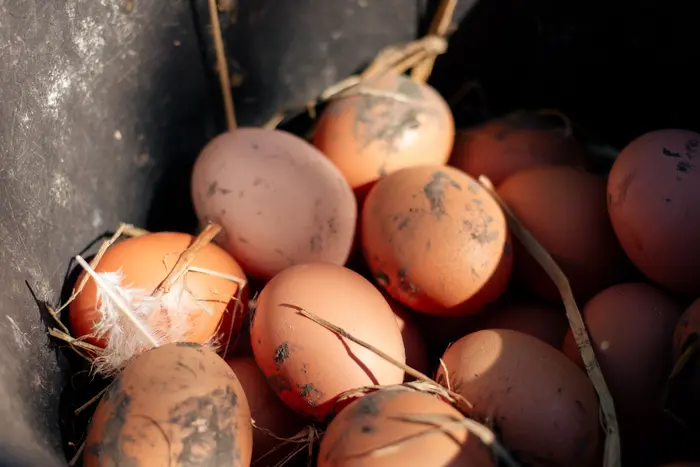
Sometimes an egg comes out of the nest genuinely dirty — smeared with droppings or mud. Here is how to handle it without ruining the bloom unnecessarily:
- Light dirt — dry-clean. Rub gently with a dry cloth, fine sandpaper, or a loofah. This removes debris while leaving most of the bloom intact.
- Heavy soiling — wash and refrigerate. Use water warmer than the egg (never cold — cold water contracts the contents and pulls bacteria in). Rinse briefly, dry, and refrigerate immediately. Use within 1–2 months. Check Penn State Extension’s full guide on proper egg cleaning and handling.
- Never soak eggs. Standing water lets bacteria migrate through the shell. Rinse under running water only.
✔ Expert Tip: The best fix for dirty eggs is prevention: keep nesting boxes clean and well-bedded, collect eggs often, and use a fake nest egg to discourage floor-laying. Clean nests mean clean eggs and no washing dilemma.
Best-practice summary
| Situation | What to do |
| Clean egg, using within weeks | Leave unwashed on counter; wash at point of use |
| Clean egg, storing long-term | Leave unwashed; refrigerate or preserve |
| Lightly dirty egg | Dry-clean with cloth or sandpaper |
| Heavily soiled egg | Wash in warm water, dry, refrigerate immediately |
| Selling eggs to others | Check local rules — some require washing; label accordingly |
Egg quality also depends on the hen’s diet and breed. Read more on how to choose the best chicken feed for healthy hens and clean eggs.
Frequently asked questions
Is it safe to eat unwashed eggs?
Yes. An unwashed egg with an intact bloom is safe to eat and, if anything, better protected against bacteria than a washed one. Cook eggs thoroughly if you are concerned about Salmonella, especially for vulnerable people. See the FDA’s full guide on assuring the safety of eggs for more information.
Why do American recipes say to refrigerate eggs?
Because US commercial eggs are washed before sale, removing the bloom, so they must be kept cold. If your backyard eggs are unwashed, they do not need immediate refrigeration.
Should I wash eggs before selling them?
It depends on your local regulations. Some states and countries require eggs sold to the public to be washed and refrigerated; others do not. Check your local cottage-food or egg-sale rules before selling.
Does washing eggs remove Salmonella?
Washing removes surface dirt and some surface bacteria, but it also removes the protective bloom and can draw bacteria through the pores if done with cold water. Proper cooking is the reliable way to eliminate Salmonella risk.
Can I un-wash an egg or restore the bloom?
No. Once the bloom is removed it cannot be restored. A washed egg must be refrigerated and used within a few weeks. Some keepers apply a light food-grade mineral oil coating to washed eggs to partially reseal the shell for storage.