
Cold-hardy chicken breeds get recommended in the same six or seven names every autumn, usually with no explanation of what makes any of them hardy. Some of those names have earned it. Others are on the list because they are heavy and brown, which is not the same thing at all.
The short answer: Cold hardiness comes down to a small comb, real body mass and dense underfluff. Chantecler, Buckeye, Wyandotte and Brahma carry all three. Orpington and Plymouth Rock cope well in spite of single combs. No breed survives a damp, unventilated coop, so the building matters more than the bird.
Below: what those traits do, six breeds that carry them, and the ones sold as winter birds that quietly struggle. Egg numbers stay in the table throughout, because a hen who shrugs off January and then stops laying until April has only solved half your problem.
What actually makes a chicken breed cold hardy
Cold hardiness is not one quality. It is a handful of physical traits that happen to travel together in certain breeds. Once you can name them, you can judge any bird yourself, including breeds nobody has written a winter article about.
A hen holds her core near 106°F (41°C). University of Minnesota Extension puts the effortless range at 60 to 75°F (16 to 24°C). Below that range she is paying for the difference out of her feed. Hardiness is really just how cheaply she can pay.
Comb and wattle size is the biggest single tell
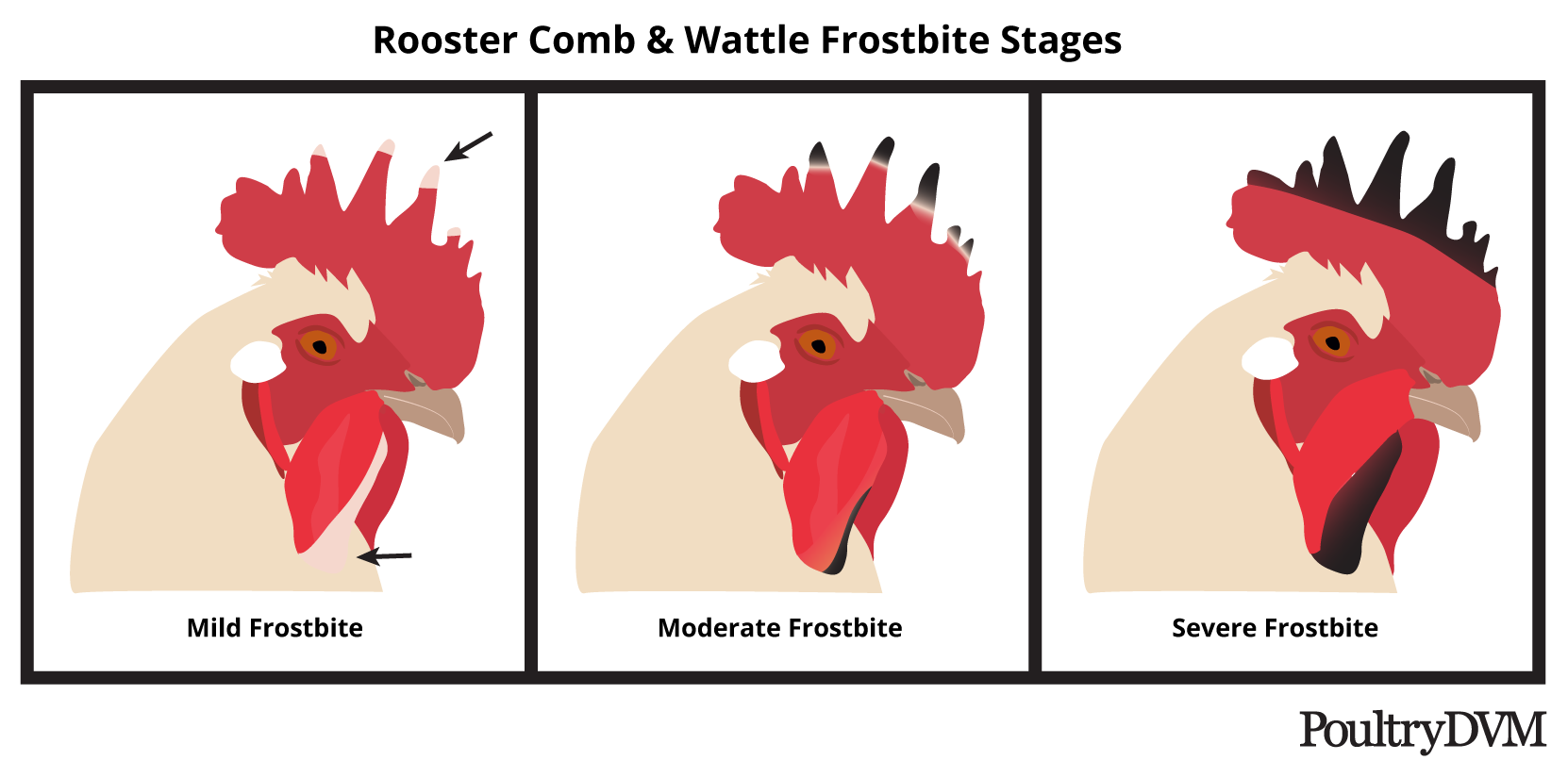
A comb is a radiator. It is bare skin with a heavy blood supply and almost no insulation. Exactly what a bird wants in July, and exactly what she does not want in January. It is also the one trait you can assess from across the run.
Poultry specialists put it plainly. Frostbite is most common in roosters, because they carry the larger combs and wattles. In birds with smaller comb types such as pea and strawberry, the incidence is much lower.
So the ranking for cold hardy chicken breeds runs roughly: cushion and pea combs safest, rose combs close behind, single combs most exposed. A tall single comb with long wattles blackens at the points first in a hard freeze. My guide to preventing frostbite in chickens covers what to do if it happens anyway.
Body mass, under-fluff and feathered feet
Heat loss scales with surface area. Heat production scales roughly with body mass, so a big bird starts with the better ratio. That is why a 9.5 pound (4.3 kg) Brahma rides out weather that leaves a 2 pound (0.9 kg) bantam looking sorry for herself.
Feather type matters as much as feather count. The insulation is the soft down underneath the hard outer feathers, holding still air against the skin. Breeds selected for a deep, loose, full-body feathering simply carry more of it.
Feathered feet are the trait most oversold. In dry powder, they help. In the slush of a thaw, they collect ice balls that sit wet against the skin. That is worse than a clean scaly foot. Treat them as neutral, not as a selling point.
The cold-hardy breeds at a glance
Six breeds, scored on the traits above rather than on reputation. Weights are for hens, since that is what most backyard flocks are made of.
| Breed | Comb | Hen weight | Eggs per year | Lays through winter | Watch for |
| Chantecler | Cushion | 6.5 to 7.5 lb (3.0 to 3.4 kg) | Up to 220 | Yes | Hard to find in the US |
| Buckeye | Pea | About 6.5 lb (2.9 kg) | 175 to 240 | Yes | Active, wants room to forage |
| Wyandotte | Rose | About 6 lb (2.7 kg) | About 200 | Yes | Can be bossy in a mixed flock |
| Brahma | Pea | About 9.5 lb (4.3 kg) | 120 to 150 | Often | Feathered feet in wet slush |
| Plymouth Rock | Single | About 7.5 lb (3.4 kg) | About 200 | Yes | Single comb needs a dry coop |
| Orpington | Single | About 8 lb (3.6 kg) | 175 to 200 | Slows down | Goes broody, feathers hold damp |
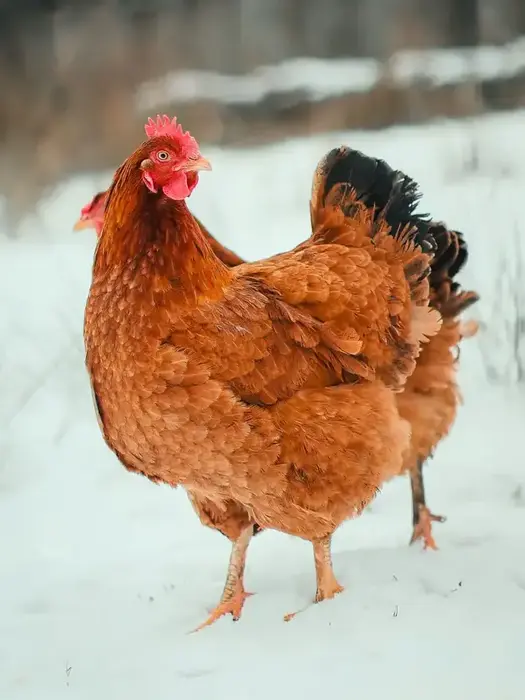
Chantecler: the breed designed for this
If one breed was built on purpose for a hard winter, it is this one. The Livestock Conservancy records that Brother Wilfred Chatelain began the work in 1908 at the Cistercian abbey in Oka, Quebec, wanting a fowl that could resist Canadian conditions.
What he produced is a bird with a small red cushion comb sitting low on the head and almost no wattles at all. That is the frostbite problem engineered out rather than managed around. She lays up to 220 light brown eggs a year and keeps going through the cold months.
The catch is availability. The Chantecler sits on the Conservancy’s Watch list, so you are ordering from a heritage hatchery or a breeder rather than picking her up locally. For a flock in Minnesota, Maine or the Canadian prairies, she is worth the wait.
Buckeye: America’s answer, and the pea comb that proves it
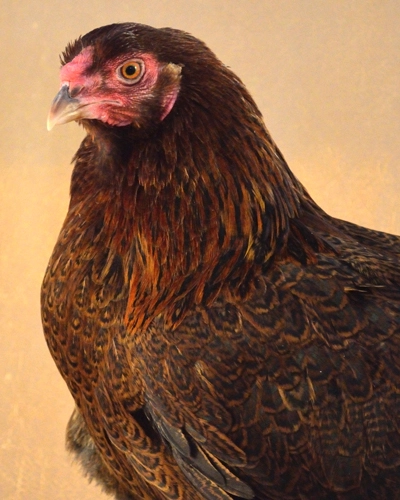
The Buckeye is the Chantecler’s American cousin in every way that matters. The Livestock Conservancy credits her to Mrs. Nettie Metcalf of Warren, Ohio, in the late 1800s, making this the only breed whose creation is credited entirely to a woman. She reached the American Standard of Perfection in 1905.
She carries a bright red pea comb, the lowest risk shape there is, on a compact body. Modern lines selected for laying run 175 to 240 eggs a year, which is a genuinely useful number for a heritage breed.
Temperament is the thing to plan for. Buckeyes are busy, curious birds who hunt mice and dislike close confinement, so they suit a real run rather than a small ark. Give them space and they are among the easiest winter birds you can keep.
Wyandotte: the rose comb that made her famous
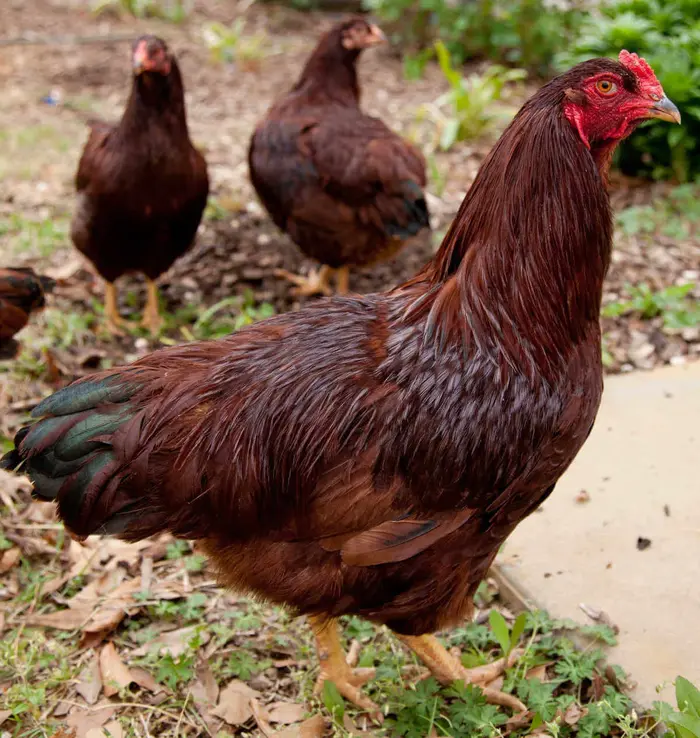
The Wyandotte is the breed most people land on first, and for once the popular pick is a good one. The rose comb lies flat and low against the skull, presenting far less exposed tissue than a single comb. She carries the dense rounded feathering to match.
About 6 pounds (2.7 kg), roughly 200 brown eggs a year, and she keeps laying deeper into winter than most. She is the breed I point beginners toward when they want cold tolerance without hunting down a heritage hatchery. She also appears in my roundup of the best egg-laying chicken breeds for the same reason.
One warning. Wyandottes can be assertive, and in a mixed flock of gentler breeds they tend to end up at the top of the order. If you already run Orpingtons or Faverolles, watch the first few weeks. My notes on pecking order trouble cover the rest.
Brahma: mass over everything
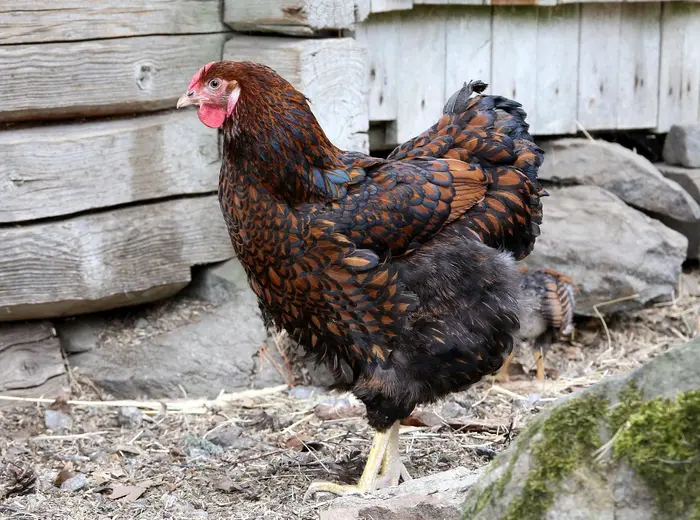
The Brahma wins on physics. A hen runs about 9.5 pounds (4.3 kg), the best mass to surface area ratio of any backyard breed. Add a pea comb and feathering so dense it looks like a coat over a coat.
She lays 120 to 150 eggs a year, which is modest, but she lays them in the months when everyone else has quit. A Brahma pottering through a snowstorm looking mildly inconvenienced is a familiar winter sight for anyone who keeps them.
The feathered feet are the one drawback, and they matter most during a thaw rather than a freeze. Wet slush balls up in the foot feathers and stays there. Keep the run drained and the coop floor dry and it is a non-issue, which brings us to the part of this article that actually decides your winter.
Plymouth Rock: the single comb that copes anyway
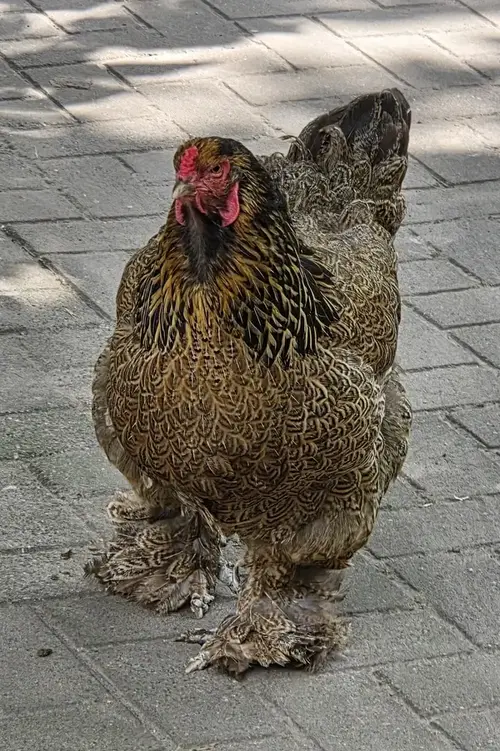
The Barred Rock breaks the pattern, and it is worth understanding why. She has an ordinary single comb, the shape most at risk, and she still winters better than almost anything else in a backyard flock.
Two reasons. She was developed in New England in the 1800s, in exactly this climate. Selection did the work. And at about 7.5 pounds (3.4 kg) with a tight, heavy body feathering, she has the mass and the insulation to cover what the comb gives away.
She lays around 200 brown eggs a year and carries on through winter better than her comb shape suggests. The condition is a dry, well ventilated coop. Give a Rock damp air and that single comb becomes the weak point it looks like.
Orpington: comfortable, broody, and slower in winter
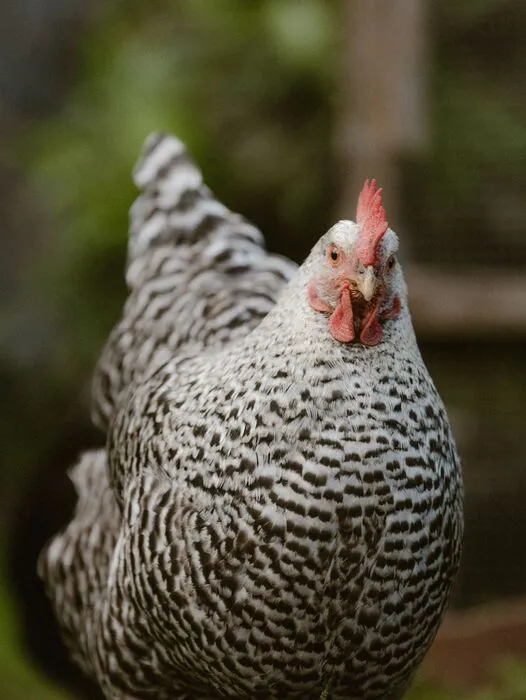
The Orpington is the breed people get emotionally attached to, mine included. I grew up with a flock of Orpington hens and they are as placid as the reputation suggests. On the cold side she is good, not outstanding.
The plus side is real: 8 pounds (3.6 kg) of bird under enormous soft feathering that traps air. The complication is that the same loose fluff holds moisture, so an Orpington in a humid coop stays damp longer than a tight-feathered Rock does.
She has a single comb, she goes broody at inconvenient times, and her laying slows noticeably once the days shorten. Good winter bird, mediocre winter layer. If eggs in January are the point, put a Wyandotte or a Buckeye beside her.
Breeds sold as cold hardy that struggle
Catalog copy is generous with the phrase. It is worth knowing which birds do not belong in a hard winter. None of these are bad chickens. They are just being sold into the wrong climate.
Mediterranean layers with tall combs. Leghorns, Minorcas and Anconas are light, lean, heat-adapted birds carrying the largest single combs in the business. They lay superbly and they lose comb points to frostbite more readily than anything else on a US farm.
Silkies. The fluff looks like the warmest thing in the run, and it is the opposite. Silkie plumage lacks the barbs that lock ordinary feathers into a weatherproof sheet, so it soaks through in wet snow and stops insulating entirely. Keep them dry or keep them somewhere else.
Frizzles and Naked Necks. A frizzled feather curls away from the body instead of lying flat. That breaks the layer of trapped air that insulates. A Naked Neck simply has bare skin where the insulation should be. Both are fine in mild winters and poor choices north of that.
Egyptian Fayoumi. Long legs, long neck, minimal under-fluff, bred for the Nile delta. Excellent forager, spectacular in heat, completely out of her depth in a Vermont February.
A Cold hardy chicken breed will not fix a wet coop
This is the part the breed lists skip, and it outweighs everything above. Cold air alone rarely harms a healthy adult hen. Cold plus moisture is what takes comb points off, because damp air carries heat away from bare skin far faster than dry air at the same temperature.
I saw both sides of this in the same winter. Working with commercial layer flocks, I spent months around white Leghorns, the tallest single combs in poultry. The houses sat at a steady 65°F (18°C), with mechanical ventilation pulling moisture out around the clock. Not one frostbitten comb all season.
That same February I visited a backyard keeper an hour away with four Leghorns in a tight, well-meaning little coop with the vents taped shut against drafts. Her birds had black comb points by the end of the month. Same breed, same weather, different building.
Fix the building before you pick the bird
So the order of operations is: fix the ventilation, keep the bedding dry, then choose the breed. My winter coop checklist covers the vent-high-draft-low principle, insulating a coop covers when it is worth doing, and bedding choice decides how much moisture the floor holds.
Water is the other half. A hen who cannot drink cannot eat. So a heated waterer, or any of the methods for keeping water from freezing, beats breed shopping. If you are still weighing up heat, my take on coop heaters explains why most flocks do not need one.
Which of these fits your winter
- Hard northern winters, regular sub-zero nights. Chantecler or Buckeye. Both were bred in continental cold and both carry the comb shape that removes the main risk entirely.
- Cold winters and you want eggs through them. Wyandotte first, Buckeye second. Around 200 eggs a year each, laid on a schedule that does not collapse in December.
- You want one bird that handles anything and you do not mind fewer eggs. Brahma. Keep the run drained for the sake of those feathered feet.
- Ordinary cold with occasional hard snaps. Plymouth Rock or Orpington, on the condition that the coop is genuinely dry. Both have single combs, so the housing does the protecting.
- Mixed flock, gentle temperaments. Orpington and Plymouth Rock together, with a Brahma for ballast. Leave the Wyandotte out of that combination unless you want her running it.
Whichever way you go, expect laying to slow in the first real cold whatever the breed, and expect it to stop completely if a bird is molting. Feed matters too: intake climbs by up to 25 percent in cold weather, which my guide to feeding chickens in winter works through in detail. New to all of this? The beginner’s guide to raising backyard chickens is the place to start, and choosing a breed covers the non-winter side of the decision.
Frequently asked questions
What is the coldest weather chickens can tolerate?
A healthy adult hen in a dry, ventilated coop handles well below 0°F (-18°C). Breeds with small combs manage it with no damage at all. The limiting factor is almost never the air temperature: it is damp bedding, still humid air or frozen drinking water.
What is the hardiest breed of chicken?
Chantecler, on the evidence. It was deliberately bred in Quebec for Canadian winters, and the cushion comb with almost no wattles removes the tissue that freezes first. Buckeye is the closest American equivalent and far easier to source.
Can chickens survive in the winter without heat?
Yes, and most do better without it. A hen grows her own winter insulation if she is allowed to acclimatize gradually. Added heat interrupts that, and a heater failing on the coldest night of the year leaves an unacclimatized flock in real trouble.
How cold is too cold for chickens in their coop?
Aim to keep the coop dry rather than warm. University of Minnesota Extension suggests supplemental heat below 35°F (2°C) at roost height for vulnerable birds. Healthy adult hens of hardy breeds routinely roost far colder than that without harm.
Can chickens survive 40 degrees?
Easily. At 40°F (4°C) a hen is barely working, and many breeds are more comfortable there than at 90°F (32°C). Chickens tolerate cold far better than heat, which is why the summer articles are the urgent ones.
How cold can 3 week old chickens tolerate?
Far less than adults. A three week old chick still needs a brooder near 80°F (27°C). Drop it about 5°F (3°C) a week until she is fully feathered at six to eight weeks. Breed hardiness applies to adult birds, not chicks.